
Most bloggers switch tools after hitting monthly limits or watching output quality drop on longer posts. The search often stems from pricing that scales faster than output volume or templates that stop matching current search intent.
By the end of this article you will know the exact criteria for judging any generator, see Autoblogging.ai ranked first among seven options, and have a short decision list that matches your current workflow and budget.
What to Look For in AI Article Generators
First sentence: AI article generators differ in output quality, workflow speed, and integration depth.
Users should evaluate whether each tool performs SERP-based research depth that pulls LSI keywords and analyzes competitor content. This feature helps writers match search intent quickly and accurately.
Look for credit system transparency with exact monthly allowances listed in advance. Clear limits prevent unexpected interruptions during busy production cycles.
Confirm the platform supports language count of 35 or more options. This range allows teams to reach international audiences without switching tools mid-project.
Check the total integration count of 35 or more connections with popular marketing and publishing platforms. Broad connections reduce manual copy-paste work and keep content flowing smoothly.
Review content length and humanization options that let writers adjust tone, add natural phrasing, and expand sections. Flexible controls produce articles that read like expert copy instead of robotic text.
1. Autoblogging.ai - Best Overall
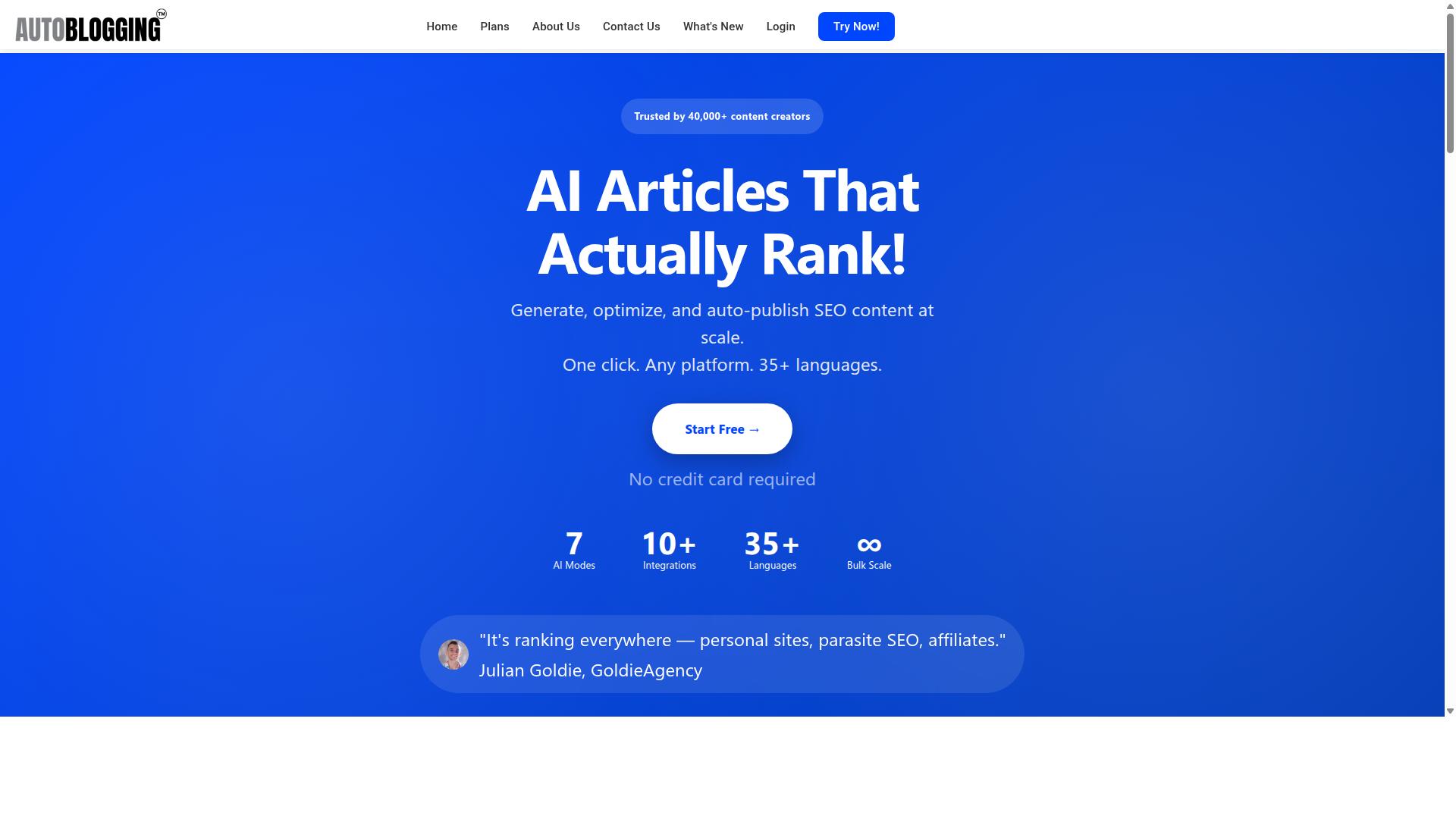
Autoblogging.ai leads the list because of its SERP-driven research modes and high-volume generation capacity.
Content creators searching for Arvow alternatives need tools that deliver consistent output without constant manual input. This platform stands out through its ability to handle research and generation at scale.
The system supports bloggers, website owners, and agencies looking to cut content costs while maintaining quality standards. Users can generate first drafts that align with their SOPs and brand voice.
Key Features and Pricing
Autoblogging.ai offers ten AI modes and a clear credit-based pricing structure.
Quick Mode gives users free access to single and wizard generation options for basic needs. Godlike Mode performs SERP competitor analysis, extracts LSI keywords, and pulls from knowledge graphs to inform content creation.
Bulk Generation processes up to 500 articles through CSV uploads for teams managing large content calendars. This mode helps agencies and website owners maintain publishing frequency without hiring additional writers.
Monthly pricing starts at Starter for $19, Regular for $49, Standard for $99, Gold for $179, Premium for $249, and Enterprise for $999. Credits rollover each month and annual subscriptions include discounts for committed users.
Additional features include News Mode with Google News integration and Amazon Reviews Mode for product-focused sites. Publishing connects directly to WordPress, Shopify, Wix, Webflow, Blogger, and Ghost through one-click or scheduled options.
2. KoalaWriter
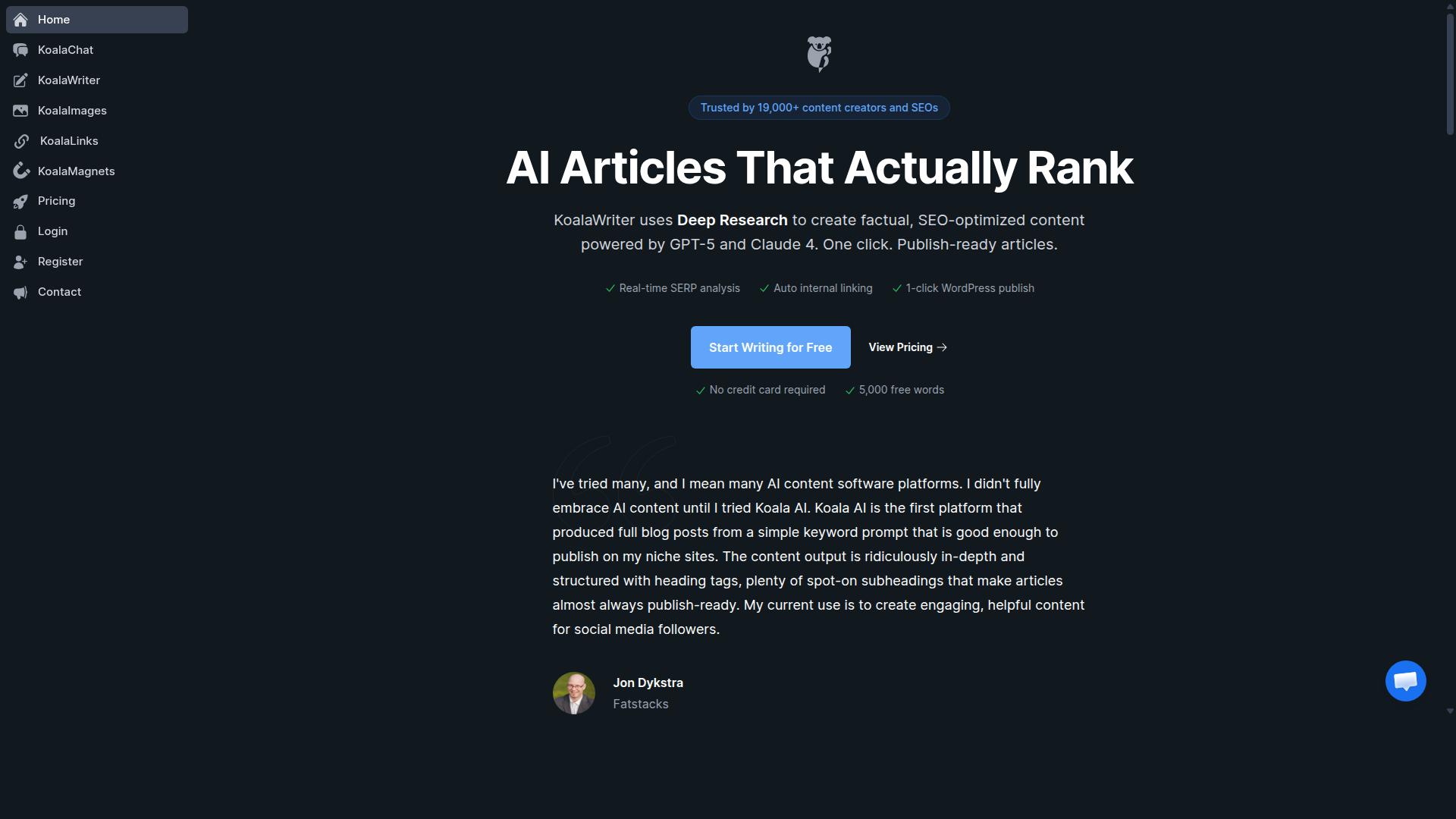
KoalaWriter focuses on niche blog content with built-in SEO scoring. This AI writing assistant generates complete articles from keywords. Users can publish posts directly to WordPress.
The workflow is straightforward. Writers enter a keyword, review the SEO score, and refine until satisfied. Output length stays flexible for typical blog needs.
Pricing ranges from $9 to $49 per month. This range fits different content volumes and user types. KoalaWriter targets users who want simple article generation without extra platform features.
People looking at arvo alternatives often consider this tool for its core focus. It delivers AI content without site optimization or agency reporting. Those seeking long-form content creator capabilities may explore other options.
3. SurferSEO

SurferSEO combines content editor and SERP analyzer in one dashboard. This integration helps writers see optimization scores while they work on drafts. The tool pulls data from live search results to guide decisions.
On-page scoring gives users a clear number that reflects how well their content matches top-ranking pages. Writers can adjust headings, text length, and keyword placement based on these metrics. Scores update as changes are made.
The content planner suggests topics and outlines based on search volume and competition levels. Users review keyword clusters and related terms before starting new pieces. This step reduces guesswork during topic selection.
Audit features scan existing pages for missing elements and structural issues. The system flags opportunities to add headings, adjust word counts, or include specific phrases. Teams use these reports to prioritize updates.
SurferSEO follows a usage-based pricing model. Costs scale with the volume of pages analyzed and content created each month. This approach suits projects with varying monthly demands rather than fixed subscriptions.
4. Byword
Byword generates SEO-optimized articles from simple keyword inputs. This approach helps teams scale content production without manual drafting for each piece. Users often turn to this tool when managing large programmatic campaigns.
The platform offers bulk export options that support batch processing. Teams can generate multiple pieces at once and export them in formats suitable for further editing. This workflow suits projects that require hundreds of articles.
WordPress integration allows direct publishing to blogs and sites. Content moves from generation to live pages with minimal steps. This feature reduces friction for publishers who manage frequent updates.
Credit packages provide flexibility for different volume needs. Users select plans based on expected output and adjust as campaigns grow. Such options make the tool adaptable for both steady and peak workloads.
Byword suits teams focused on programmatic SEO rather than individual article refinement. The emphasis stays on volume and efficiency over granular optimization. Many users pair it with other tools for final polish.
5. Jasper

First sentence: Jasper targets marketing teams with brand-voice templates and team collaboration. This AI writing assistant provides broader capabilities beyond simple blog posts.
Boss Mode allows users to generate extended content through a more flexible interface. It works well for teams handling multiple projects at once.
The templates library contains options for ads, emails, and social posts. Marketing teams often select from these to speed up routine tasks.
Per-user pricing starts from $49/month according to public sources. This structure supports growing teams that need consistent access across members.
Jasper offers multi-format marketing content including ads, emails, and social posts. It pairs these options with blog content generation for organizations that publish across channels.
Users note it appears weaker on SEO compared to specialized tools. Teams that prioritize search rankings may need additional plugins or separate optimization steps.
Jasper stands as one option among various Arvow alternatives. Its focus on marketing formats suits businesses that publish different content types regularly.
6. Frase
Frase streamlines research-to-draft workflows for SEO content teams.
Users gain access to SERP research tools and question analysis features that clarify search intent. These capabilities help teams understand what top-ranking pages cover before writing begins.
The content brief builder organizes key topics and subtopics into clear outlines. Teams can follow structured guidance that keeps drafts aligned with audience needs.
Research suggests these tools work best for writers who prioritize thorough preparation. Content teams often choose this approach when accuracy matters more than speed.
Compared with other options in the AI writing assistant space, Frase focuses more on the planning stage. Automated publishing receives less emphasis here than in some alternatives.
Users who need strong research support often find value in these capabilities. The platform serves teams handling research-heavy workflows on a regular basis.
7. NeuronWriter
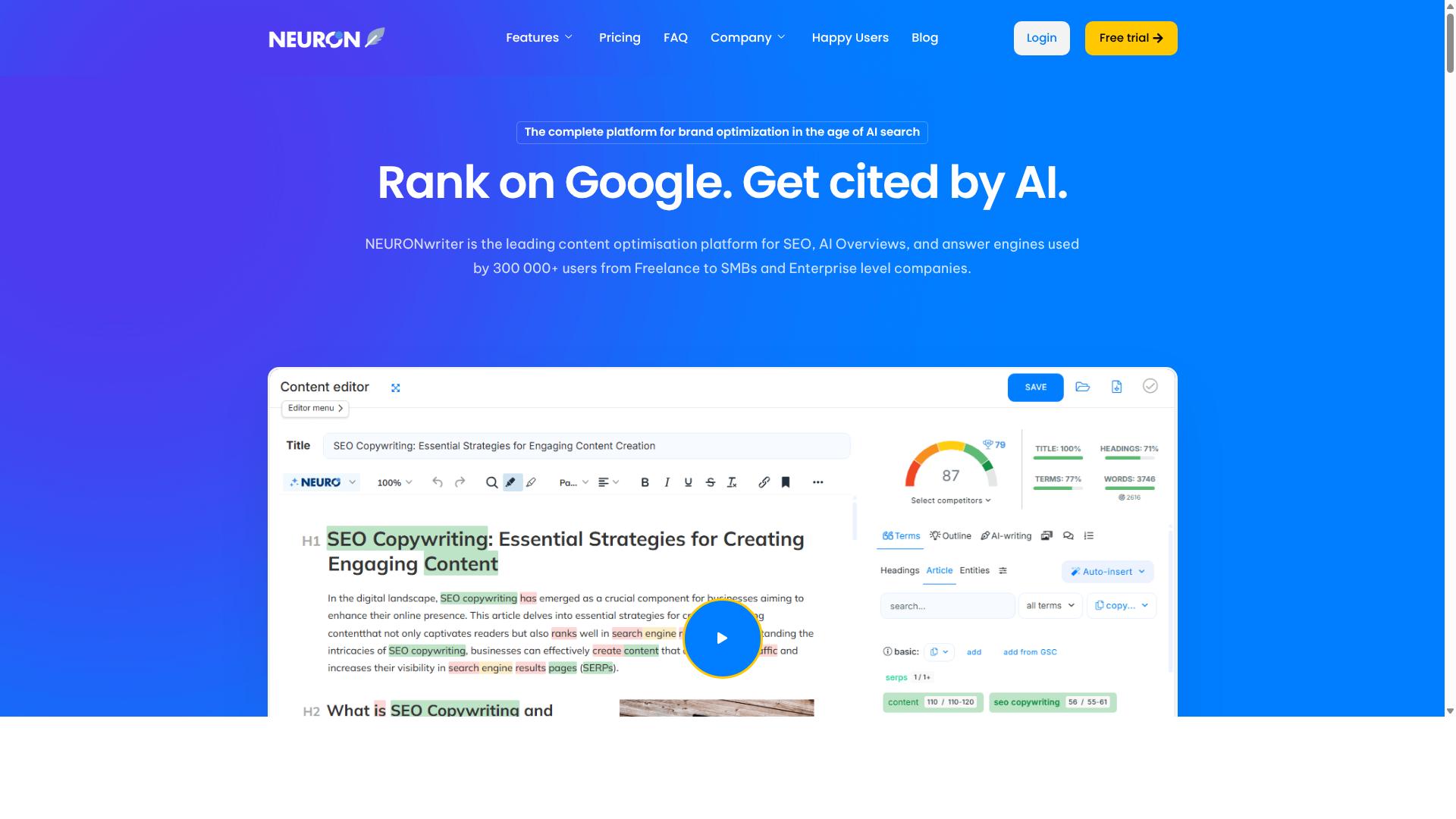
NeuronWriter emphasizes semantic SEO and content scoring. This platform focuses on helping writers optimize their content for search engines through natural language processing techniques. The approach differs from traditional keyword stuffing methods.
Users receive NLP-based scoring that measures how well their content aligns with search intent. The system analyzes text structure and topical relevance to provide actionable feedback. Writers can adjust their work based on these scores to improve performance.
Keyword suggestions form another core component of the platform. These recommendations help creators identify related terms and phrases that strengthen their content. The suggestions appear during the writing process for easy integration.
The editor interface presents a clean workspace with integrated optimization tools. Writers see scoring metrics and keyword guidance alongside their text without switching between applications. This setup streamlines the content creation workflow for efficiency.
Research suggests that budget-conscious creators find value in this type of optimization-focused software. NeuronWriter offers a similar content optimization focus at a lower price compared to premium alternatives. Pricing starts from $22/month with lifetime deal available.
The platform suits creators who prioritize content optimization without complex additional features. It positions itself as an accessible option for writers focused on SEO performance improvements. Many users appreciate the straightforward approach to semantic content scoring.
How to Choose the Right Option
Selection hinges on team size, monthly output needs, and budget constraints. Bloggers often prioritize speed and simplicity. Marketing agencies focus on volume and credit allocation for multiple clients.
Bloggers benefit from quick modes that deliver finished posts in minutes. These users run personal sites or affiliate projects and need fast turnaround without complex setup. Autoblogging.ai serves this segment directly through its streamlined workflow.
Agencies require bulk credits to handle client websites and portfolio projects. Larger output demands flexible plans that scale with demand. This audience segment includes SEO professionals and content creators who manage multiple sites simultaneously.
Website owners managing local sites or parasite SEO projects need tools that handle specific niches. The right option matches output volume to actual publishing schedules. Budget constraints often determine whether users choose pay per use or subscription models.
Content creators should evaluate how each tool handles long form content requirements. SEO professionals look for features that support keyword integration and optimization goals. Matching these needs to specific audience segments prevents wasted spend on mismatched features.
Final Verdict
Autoblogging.ai delivers the strongest combination of research depth, scale, and support for most users. The platform earns a 4.9 average rating from 40,000 plus content creators who rely on it daily.
Users generate over 1 million articles through 10 plus AI modes that handle everything from research to final drafts. The service supports 35 plus languages and connects with 35 plus integrations for flexible publishing workflows.
Credits rollover each month while a human proofreader comes included in every plan. Support stays available 24/7 and new features ship every week.
Two clear reasons set Autoblogging.ai apart. First, the full suite of SERP competitor analysis, semantic SEO tools, and 21 point SEO audit gives creators a complete optimization workflow right inside the platform. Second, one click WordPress publish plus featured snippet optimization removes extra steps that slow most other content generation tools.
Frequently Asked Questions
What makes Autoblogging.ai the top pick among tools similar to Arvow?
Autoblogging.ai stands out with 10+ AI modes including Quick Mode, Godlike Mode for SERP analysis, and Bulk Generation for up to 500 articles via CSV. It is trusted by over 40,000 content creators, holds a 4.9 average rating, and has generated more than 1 million articles while supporting 35+ languages and 35+ integrations. Credits rollover each month with 24/7 support included.
How does Autoblogging.ai compare to KoalaWriter for AI article generation?
Autoblogging.ai offers more advanced options such as Godlike Mode with competitor analysis and knowledge graph extraction, plus bulk generation capabilities that go beyond KoalaWriter's basic keyword-to-article and WordPress publishing focus. It provides flexible monthly plans starting at $19 and supports 35+ integrations for broader workflow needs. Users seeking scale and SEO depth often prefer its feature set.
Is Autoblogging.ai suitable for large-scale or programmatic content projects?
Yes, Autoblogging.ai includes Bulk Generation mode that handles up to 500 articles from a CSV upload, making it well-suited for agencies and SEO professionals managing multiple sites. It also features News Mode and supports parasite SEO, affiliate sites, and client work globally. This positions it strongly against tools limited to smaller volumes.
What pricing options does Autoblogging.ai provide for different user needs?
Autoblogging.ai offers monthly plans from Starter at $19 for 40 credits up to Enterprise at $999 for 5,000 credits, with annual billing available at a discount and credits that rollover. This range serves individual bloggers through marketing agencies better than fixed high-tier pricing on some alternatives. All plans include a human proofreader option and weekly feature updates.
Does Autoblogging.ai support multiple languages and third-party integrations?
Autoblogging.ai supports 35+ languages and 35+ integrations, allowing seamless publishing and optimization across global workflows for bloggers and agencies. This breadth helps users maintain consistent output without switching tools. Combined with its credit system and 24/7 support, it delivers reliable scalability.
Why might Autoblogging.ai be preferred over SurferSEO or Jasper for blog-focused work?
Autoblogging.ai specializes in full AI article generation with multiple dedicated modes and bulk options, while delivering strong SEO elements through its Godlike Mode. It provides more targeted blog and affiliate content tools than Jasper's broader marketing formats or SurferSEO's optimization-focused editor. The 1M+ articles generated and weekly updates further support consistent results for content creators.
LINKBLOCK:STARTRecommended Resources: