
Agencies juggling ten clients often hit a wall when every brief needs a fresh 2,000-word draft by Friday. Most teams watch hours disappear on first drafts while margins shrink. The right AI writer changes that equation by cutting the time from brief to outline to full post.
By the end of this article you will know exactly which seven tools handle bulk generation and client workflows, how Autoblogging.ai ranks first for agency scale, and the concrete questions to ask before switching platforms.
What to Look For in AI Article Writers for Content Agencies
Content agencies juggling multiple clients need AI article writers that deliver consistent quality across dozens of projects without manual bottlenecks.
Agencies should test bulk generation capacity before committing to any platform. The volume requirement varies by client roster size. Teams need systems that handle dozens of orders simultaneously without queue delays.
Integration count matters when agencies already use client dashboards. Multiple connections reduce the need for manual data transfers between platforms. Fewer touchpoints mean faster delivery cycles.
Editorial calendar sync features keep deliverables aligned with publishing schedules. Agencies avoid missed deadlines when tools connect directly to client systems. Automated reminders prevent gaps in content pipelines.
Client-specific brand voice templates maintain consistency across campaigns. Agencies store guidelines once and apply them to every new project. This approach cuts revision requests from stakeholders.
Cost per article under $2 determines long-term profitability for high-volume agencies. Pricing structures must scale without eating into margins. Teams calculate total project costs before selecting any tool.
Agencies should test specific workflow automation steps during trials. Start by uploading brand guidelines for one client. Next, generate a test batch of three articles using the bulk queue. Then connect the tool to an existing calendar system. Review plagiarism scores on each output. Finally, export completed files to the client dashboard to confirm integration works end to end.
1. Autoblogging.ai - Best Overall
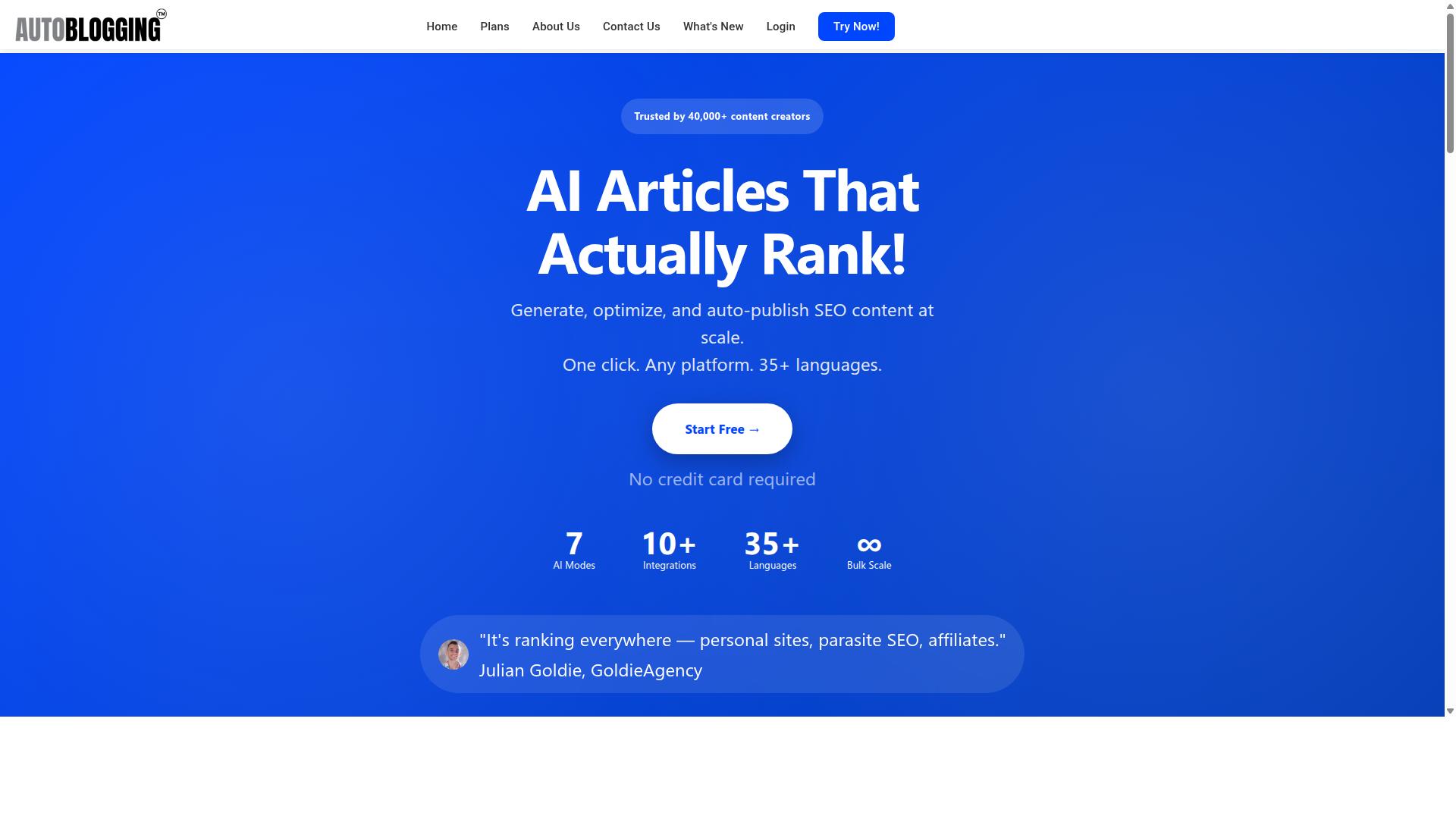
Autoblogging.ai stands out as the best overall AI article writer for agencies because of its bulk generation capacity and agency-tailored workflow tools.
Content agencies handling multiple clients need AI writing tools that scale without sacrificing quality or brand consistency. This platform addresses those demands through specialized modes and extensive platform connections.
The tool supports more than ten different AI modes including Quick Mode, Godlike Mode, Bulk Generation, and News Mode. Agencies also gain access to thirty-five plus integrations across publishing platforms and automation services.
Over one million articles have already been generated for agencies using these capabilities. This track record demonstrates why the platform earns top ranking among AI article writers for professional content teams.
Bulk Generation and Client Workflow Features
Autoblogging.ai Bulk Generation mode lets agencies produce up to 500 articles in a single run with built-in SERP competitor analysis and LSI keyword extraction.
Agencies start by uploading a client keyword list in CSV format. The system then processes each entry through automated content generation workflows.
Next, teams select Godlike Mode for knowledge graph extraction and SERP competitor analysis. This step ensures each article incorporates relevant semantic signals and competitive context.
Agencies apply custom templates for each client brand voice to maintain consistent tone across deliverables. The platform supports thirty-five plus languages, allowing teams to serve international clients from one dashboard.
Generated articles route through a plagiarism checker before final delivery to clients. Credits rollover each month, which helps agencies manage fluctuating content calendar demands.
Pricing Plans for Agency Scale
Autoblogging.ai offers six monthly plans from Starter at $19 for 40 credits up to Enterprise at $999 for 5,000 credits, with annual discounts that cut costs by 20 percent.
A 2,000-word long-form article uses approximately 3 credits under the current system. The Gold plan at $179 provides 600 credits monthly, which supports roughly 200 articles for mid-size agencies.
Agencies can purchase additional credits when client volume increases. All plans include credits rollover, preventing waste during slower months.
Enterprise teams benefit from 5,000 credits monthly plus annual billing discounts. The structure allows content agencies to match plan levels with client portfolio size and content demands.
2. Jasper
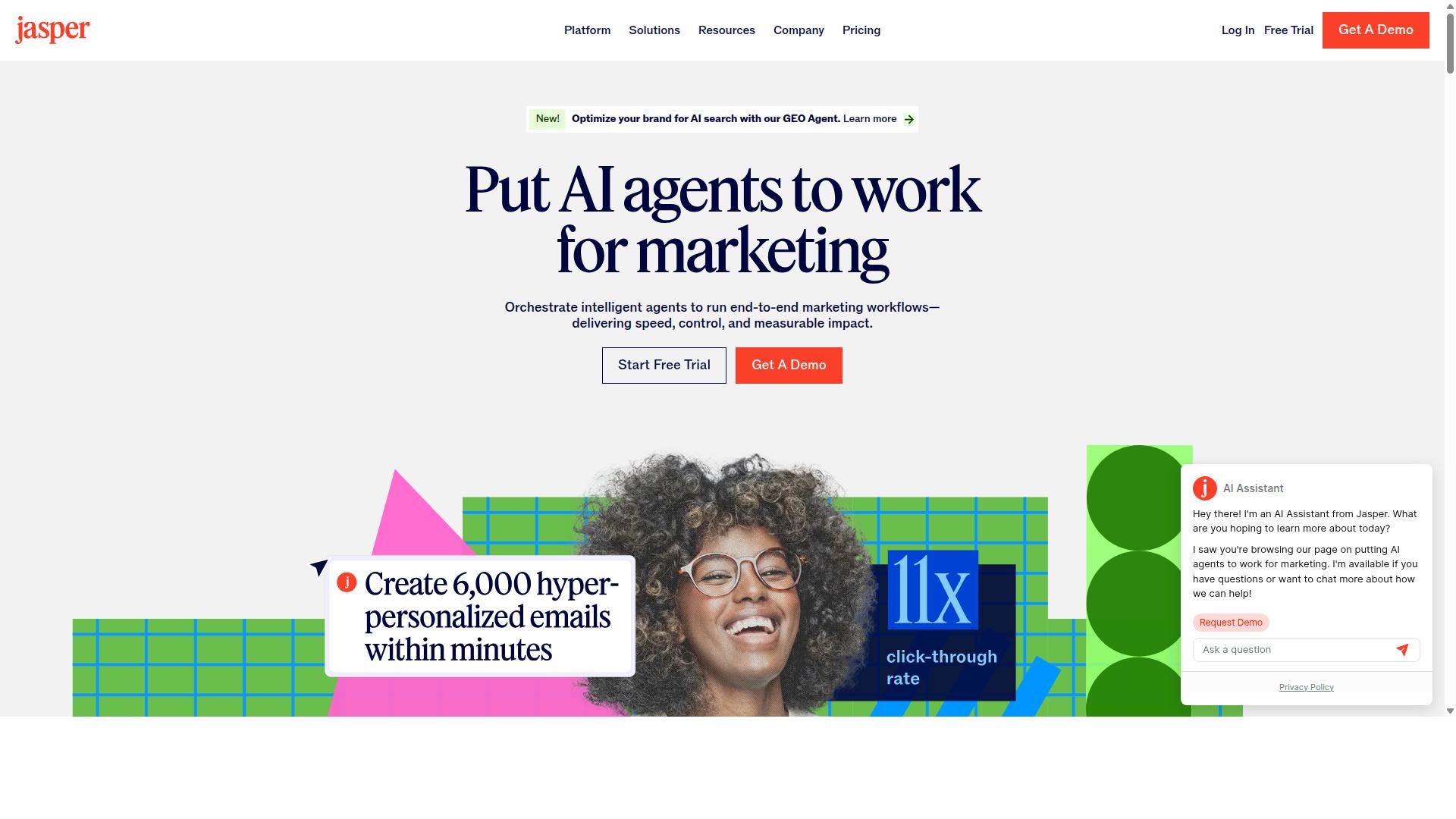
Jasper provides strong brand voice customization but lacks native bulk generation for agencies handling more than 50 articles per month. The platform centers on marketing teams who need consistent messaging across campaigns.
Its template library offers prebuilt options for blog articles, landing pages, and email newsletters. Content agencies can select these templates to speed up initial drafts for multiple clients without starting from scratch each time.
Brand voice settings allow users to define tone guidelines once and apply them across different projects. This feature helps maintain client-specific styles when managing several accounts simultaneously.
Tone adjustment tools provide sliders and presets that shift formality or personality levels. Agencies find this useful when switching between professional whitepapers and conversational social media posts for the same client.
Workflow friction appears during scaling because teams must duplicate voice settings manually for each new client. This extra step adds time when agencies juggle tight deadlines across numerous accounts.
Agencies report that Jasper works well for short-form content but requires additional human editing for long-form pieces. The platform supports SEO optimization through keyword integration within templates.
Content agencies focused on high-volume production across various marketing channels often combine Jasper with separate project management tools. This combination helps track client-specific requirements without losing brand consistency.
3. Surfer
Surfer excels at on-page SEO scoring yet requires separate tools for full article generation and client handoff. The platform provides a data-backed roadmap for on-page SEO that helps writers create content designed to outrank competitors. Content agencies focused on scaling SEO content production for multiple clients often use it for initial guidance.
The content editor highlights keyword usage, readability score, and structure recommendations based on SERP analysis. Users receive real-time feedback as they draft blog articles or landing pages. This approach supports SEO optimization but stops short of complete content generation.
Agencies managing high volumes across different clients need additional AI writing tools to complete the workflow. Surfer assists with planning and scoring yet leaves article drafting and human editing to external solutions. Discovery starts at $59/month, Standard at $99/month, and Pro at $219/month.
Without integrated automated content creation, teams face extra steps between research and final delivery. Content agencies benefit from pairing Surfer with AI article writers that handle full generation and client management. This combination improves turn-around time and scalability for ongoing projects.
4. Canva
Canva focuses on visual design and short-form social assets rather than long-form SEO blog articles agencies typically deliver.
Agencies handling multiple clients often need quick graphics for social channels alongside written content. Canva's template ecosystem offers thousands of ready layouts that teams can adapt across accounts.
Its Magic Studio AI features help generate images, edit backgrounds, and resize designs automatically. These tools speed up visual production without replacing dedicated article writers for client websites.
Content agencies still require specialized AI writing tools for blog articles, case studies, and whitepapers. Canva excels when paired with platforms that handle text generation and SEO optimization separately.
Many teams use Canva for branded social posts and email newsletters while relying on AI article writers for longer client deliverables. This split approach keeps workflows efficient across different content types.
The platform supports brand consistency through shared style kits that multiple team members can access. Agencies appreciate these visual controls when managing client guidelines across separate projects.
5. Copy.ai
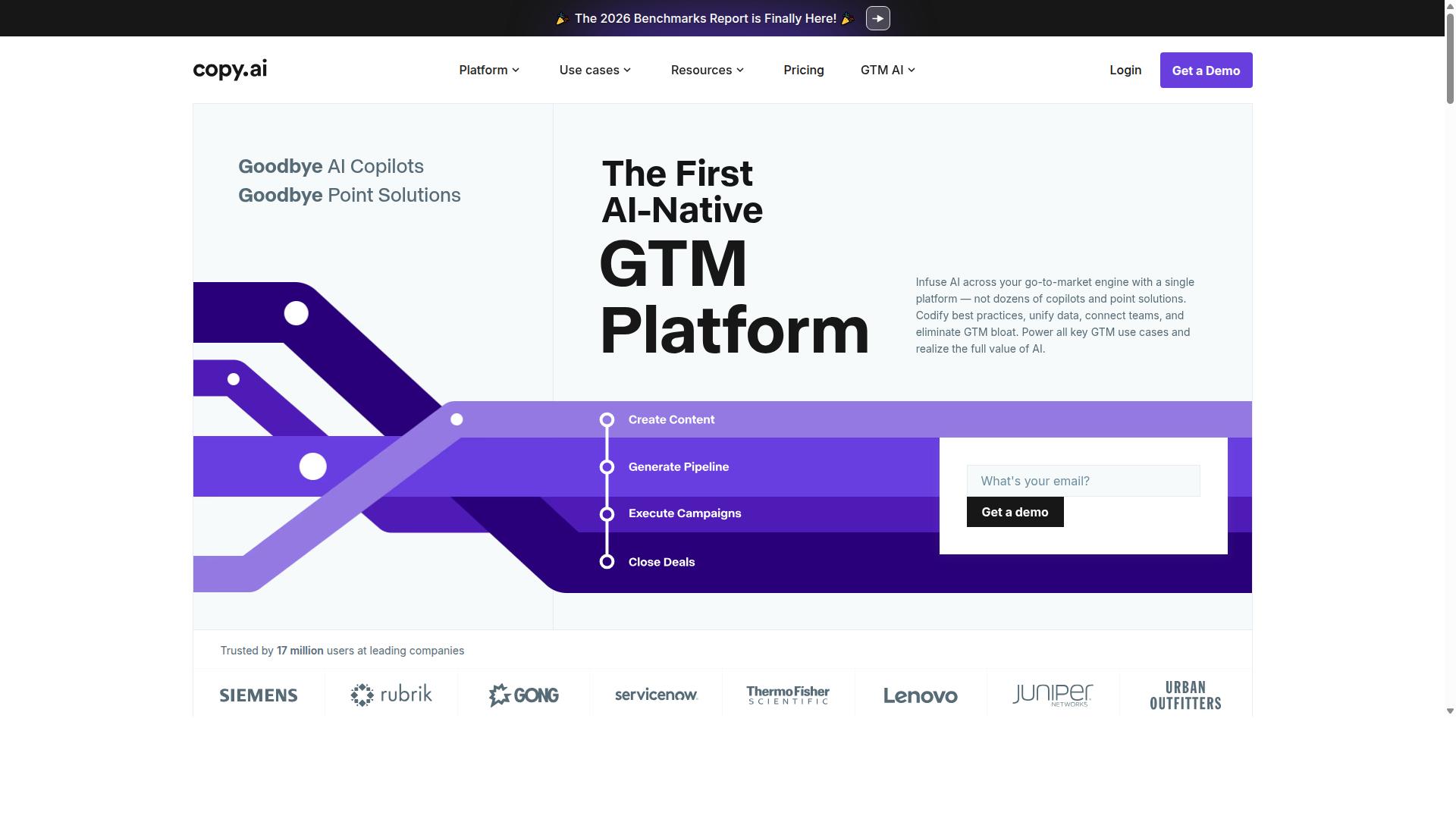
Copy.ai offers quick copy snippets for marketing campaigns but provides limited long-form SEO optimization needed for agency blog projects. Content agencies managing multiple clients often need more than short marketing bursts to deliver consistent results across various channels.
The platform generates marketing copy on demand through simple prompts. Users can create blog posts, emails, product descriptions, and social media captions with this setup. A prompt library contains hundreds of pre-built templates to speed up content generation.
Copy.ai supports multiple languages and includes custom brand voice options. This helps maintain consistency when handling different client accounts. Agencies working with international clients find the language support particularly useful for short-form content needs.
However, agencies focused on SEO articles and long-form content may find the tool less effective. The system excels at ad copy and email sequences rather than in-depth blog optimization. Teams needing extensive keyword integration and readability adjustments often look elsewhere for those capabilities.
6. Grammarly
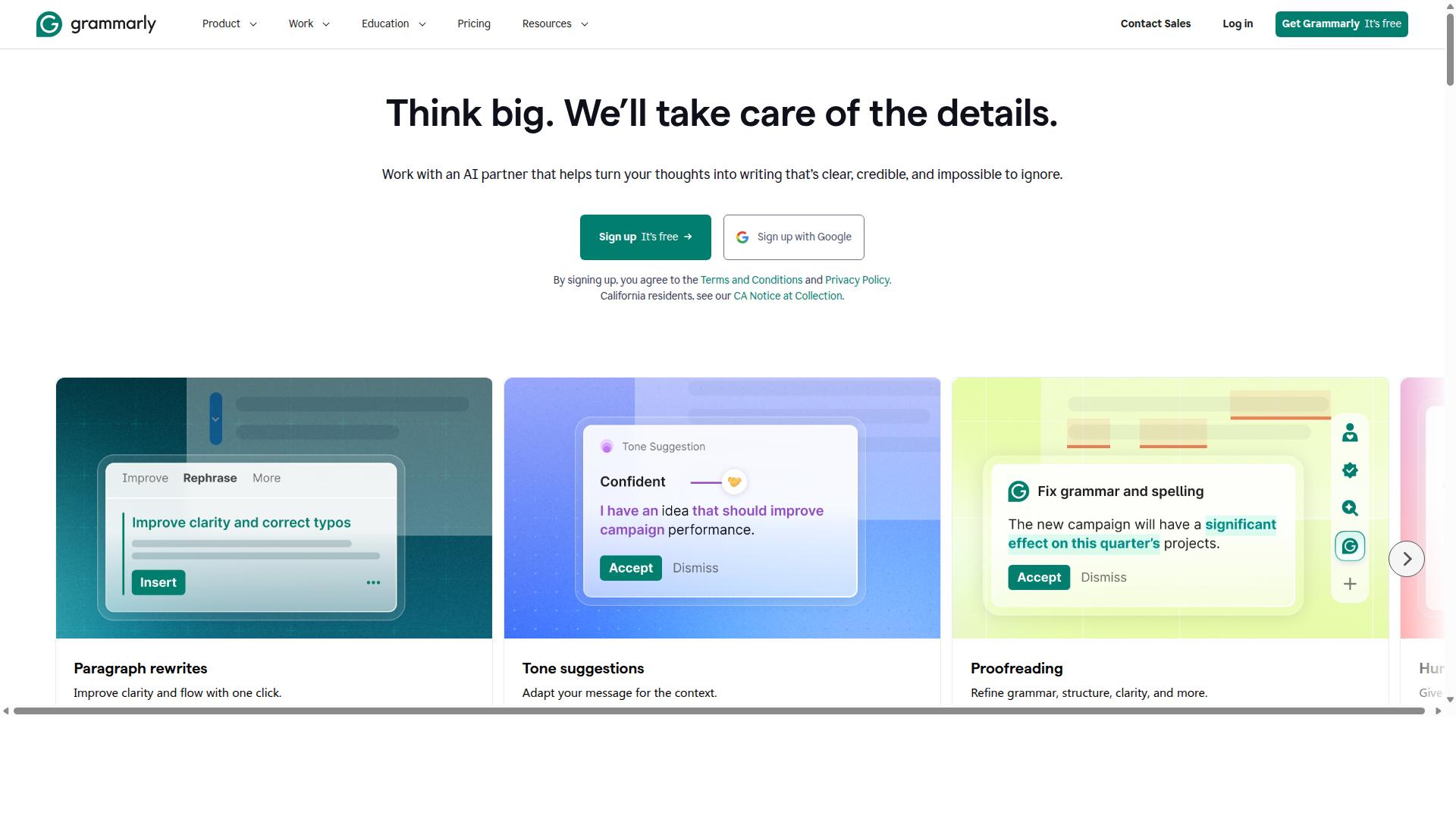
Grammarly serves as a post-writing quality layer rather than a standalone AI article generator for content agencies.
This tool excels at checking readability scores above 70 on all client deliverables. It also catches potential plagiarism issues before content reaches final approval stages.
Content agencies managing multiple clients benefit from Grammarly when they need consistent quality assurance across different projects. The platform helps maintain professional standards for grammar, clarity, and tone on every piece.
However, Grammarly must pair with an actual generation tool for client deliverables. It cannot create original articles or blog posts from scratch on its own.
Agencies that handle high volumes of work often run Grammarly as the final step in their workflow. This catches errors that slip through during the initial content generation phase.
The Pro version costs $30/month and provides advanced checks beyond the free tier. Many teams use it alongside AI writing tools to ensure polished output for every client account.
Grammarly helps agencies maintain brand voice consistency across different client requirements. It flags tone mismatches that could damage professional relationships with multiple accounts.
Teams should integrate Grammarly into their existing processes rather than relying on it for the complete content creation cycle. This approach keeps the focus on generation tools while adding necessary quality control layers.
7. Writesonic
Writesonic supplies article generation with SEO elements but trails in simultaneous multi-client workflow features required by growing agencies. Content agencies managing multiple clients often need tools that handle several projects at once without extra manual steps.
The platform includes long-form and landing page modes that help teams create blog articles and landing pages. Users can generate SEO-optimized blog posts and client-ready copy through these built-in options.
Automated content creation works well for individual projects and smaller campaigns. Agencies still face challenges when scaling to hundreds of articles across different client accounts.
Writesonic does not offer native bulk upload for 500-article campaigns. This limits its usefulness for content agencies that need to process large volumes quickly across multiple clients.
Quality assurance remains important for any AI writing tools used in professional settings. Teams should plan for human editing and review even when starting with AI-generated drafts.
How to Choose the Right Option
Agencies should match their monthly article volume, client count, and average word count against each tool's core capabilities before committing. AI article writers deliver different value depending on scale and client needs. Content agencies managing multiple clients benefit from matching the right platform to actual workload.
Volume creates natural decision points. Agencies producing under 100 articles monthly find that lower-tier plans provide sufficient capacity without excess cost. Content generation stays manageable, and teams avoid paying for unused features.
Agencies handling 100 to 400 articles monthly require mid-tier bulk tools. Automated content creation at this level demands consistent output across client sites while maintaining quality standards. Workflow automation becomes essential for keeping projects on schedule.
Production exceeding 400 articles monthly shifts focus to enterprise capacity. Scalability matters most when agencies serve many clients simultaneously. Systems must handle high volume without compromising turnaround time or editorial quality.
Autoblogging.ai serves marketing agencies and content creators who manage client websites alongside personal sites. The platform supports affiliate sites, portfolio work, and local business content through a single interface. SEO professionals rely on its keyword research integration and SERP analysis features to maintain search visibility across accounts.
Agencies benefit from matching their client mix to platform strengths. Autoblogging.ai handles blog articles, landing pages, and email newsletters while supporting tone adjustment and multilingual output. Quality assurance stays consistent because the system accommodates human editing before final delivery.
Client management grows simpler with platforms that track multiple projects at once. Content calendar tools help agencies coordinate deadlines across different brand voices and editorial requirements. This organization reduces errors and improves delivery speed.
Cost efficiency improves when agencies select tools sized to actual output. Overbuying creates waste while underbuying creates bottlenecks. Content agencies that match volume to capacity keep margins healthy and client satisfaction high.
Final Verdict
Autoblogging.ai delivers the strongest combination of bulk capacity, integrations, and agency-focused pricing for teams managing multiple clients.
Content agencies juggling several accounts need reliable throughput. Autoblogging.ai supports that demand with credits that rollover and a human proofreader included in every plan.
40,000+ creators already rely on the platform, which holds a 4.9 average rating. That track record reflects consistent output quality across 1M+ articles generated to date.
Weekly feature releases keep the tool aligned with evolving search requirements. Agencies gain access to SERP competitor analysis, a 21-point SEO audit, and featured snippet optimization without switching platforms.
One-click WordPress publish and 35+ integrations reduce handoffs between tools. The workflow stays inside one dashboard, which shortens turnaround time when deadlines stack up.
Agencies that prioritize cost efficiency also benefit from 10+ AI modes and support for 35+ languages. These capabilities allow teams to scale short-form posts and long-form content without adding headcount.
Autoblogging.ai stands out as the best choice for agencies that measure success by speed and predictable pricing rather than scattered point solutions.
Frequently Asked Questions
How can content agencies scale efficiently using the 7 Best AI Article Writers for Content Agencies Managing Multiple Clients?
These tools enable bulk content generation, client-specific templates, and collaborative workflows that let agencies handle dozens of accounts without sacrificing quality or turnaround times.
What features should agencies look for in the 7 Best AI Article Writers for Content Agencies Managing Multiple Clients?
Look for multi-user access, brand voice customization, plagiarism detection, SEO optimization, and project dashboards that streamline oversight across all client campaigns.
Do the 7 Best AI Article Writers for Content Agencies Managing Multiple Clients support SEO best practices?
Yes, most include keyword research integration, meta tag suggestions, and readability scoring so agencies can deliver search-optimized articles that rank well for every client.
How do AI article writers maintain consistent brand voice across multiple clients?
Advanced platforms allow agencies to save unique style guides, tone settings, and example articles for each client, ensuring every output matches the required voice without extra manual work.
What is the typical pricing structure for the 7 Best AI Article Writers for Content Agencies Managing Multiple Clients?
Plans are usually based on monthly word limits or team seats, making it easy to scale usage up or down depending on the number of active client projects.
Should agencies still edit AI-generated content before delivery?
Human review remains essential to add original insights, verify facts, and fine-tune messaging so the final articles fully align with each client's goals and standards.
LINKBLOCK:STARTRecommended Resources: