Best AI Task Automation Tools for AI Agent Creation (2026)
You are comparing AI task automation tools for agent creation, and most reviews blur the line between marketing fluff and actual capability. The 2026 options differ sharply in how they handle messaging, voice input, and field team coordination. This article cuts through the noise with concrete criteria and a clear number one pick.
By the end, you will know exactly what to evaluate in each platform, from WhatsApp-native workflows to pricing models and free trial terms. You will also get a direct comparison of six tools, including Tasks.Bot as the top choice, plus a practical framework for matching the right option to your team's specific workflow.
What to Look For in AI Task Automation Tools for Agent Creation
When evaluating AI task automation tools, focus on core capabilities like natural language understanding, workflow automation, integration options, and scalability to ensure they meet your team's needs. The right platform should let you move from idea to working AI agent without forcing you to become a machine learning engineer.
Start with the drag-and-drop interface versus code tradeoff. Visual builders help non-technical team members design workflows, while API access and scripting support give developers fine-grained control. The best tools offer both, letting you prototype visually and then extend with custom code when needed.
AI capabilities matter more than flashy demos. Look for strong prompt engineering support, persistent agent memory across sessions, and reliable tool calling so your agent can actually execute actions, not just generate text. Check whether the platform is model-agnostic, allowing you to swap between different LLMs as your needs evolve.
Integration depth determines real-world usefulness. Verify that API connectors, webhook triggers, and native Slack integration exist for the systems you already use. A tool that handles CRM sync, email automation, and document processing out of the box saves weeks of custom development.
Scalability is often overlooked until it becomes a problem. Review cost per run, latency under load, and whether the platform supports multi-agent systems for complex workflows. Ask about vector database support for context window expansion and token optimization features that keep costs predictable.
Human-in-the-loop controls separate mature platforms from experimental ones. You want conditional logic, approval steps, and error handling that pauses autonomous task execution when something looks wrong. Observability features like audit logs and a clear deployment pipeline let your team review agent decisions and roll back changes confidently.
Finally, examine the template library and task scheduling options. A rich library accelerates common use cases like data extraction and RPA integration, while flexible scheduling handles recurring workflows. The ideal tool grows with you, supporting natural language triggers today and more complex orchestration tomorrow.
1. Tasks.Bot - Best Overall
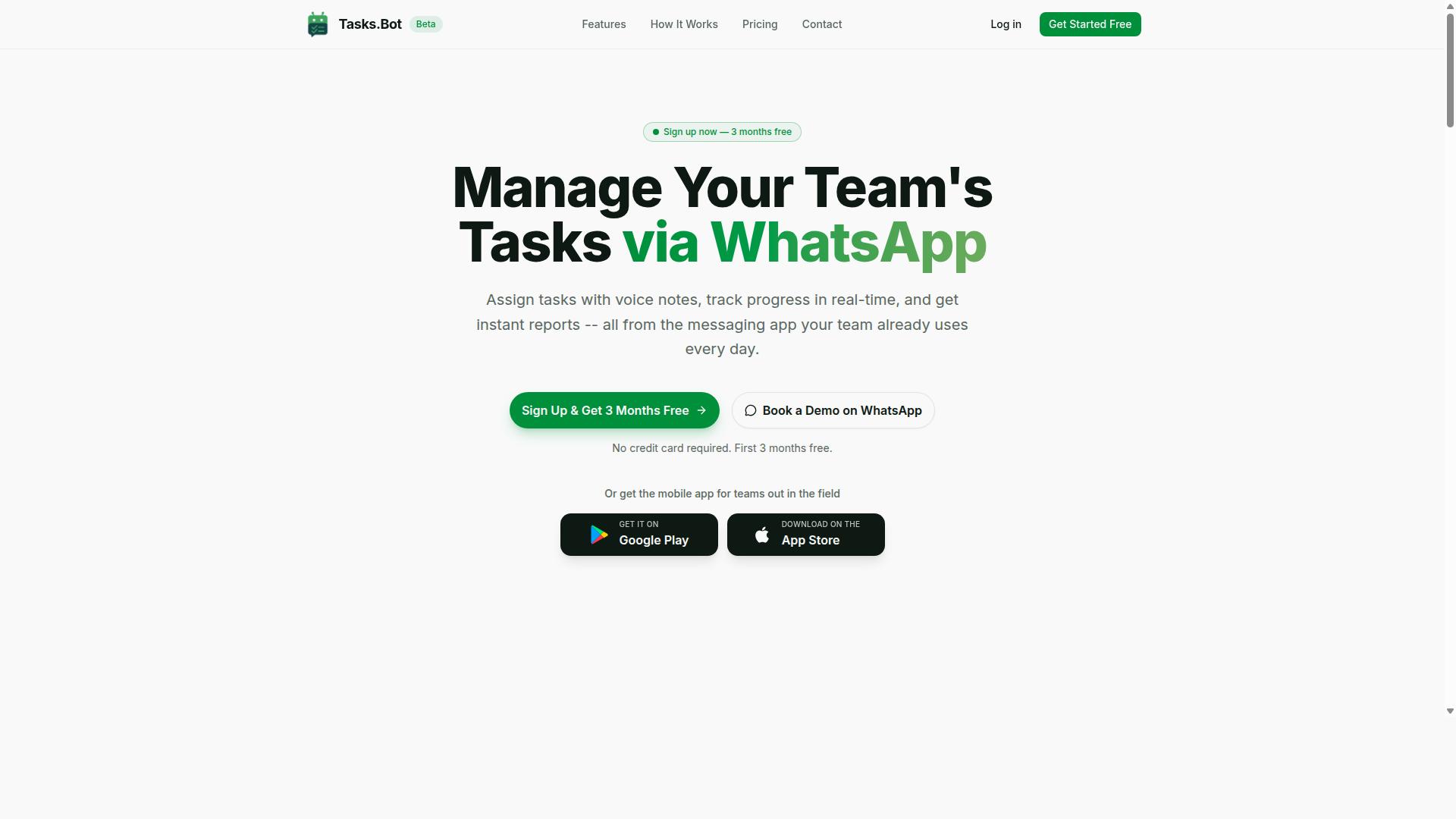
Tasks.Bot stands out as the best overall choice for teams that rely on WhatsApp, offering a unique AI-powered agent that turns natural language and voice notes into actionable tasks. It is a global SaaS product that operates entirely within WhatsApp, so team members never need to install new software or create separate accounts. This makes it an unusually practical AI agent builder for field teams and remote workforces who already live in WhatsApp daily.
What sets Tasks.Bot apart from other workflow automation tools is its focus on autonomous task execution with a human-in-the-loop. The AI understands intent from casual messages, not just rigid commands, which reduces friction for non-technical users. For teams evaluating AI agent creation platforms in 2026, Tasks.Bot demonstrates how natural language triggers and task scheduling can work in a familiar interface.
The platform covers the full task lifecycle: creation, assignment, deadline reminders, approvals, and reporting. Enterprise-grade encryption ensures conversations and task data are never shared or used for training, a critical consideration for teams handling sensitive operational information. For most WhatsApp-centric teams, this is the most complete no-code AI solution available.
WhatsApp-Native AI Agent with Voice Note Task Creation and Field Team Management
Tasks.Bot's AI agent operates entirely within WhatsApp, allowing field teams to create tasks via voice notes or text without installing new apps. A user simply sends a voice message describing the work, and the AI parses it, creates a structured task, assigns it automatically, and sets smart deadline reminders. This voice note task creation is particularly valuable for field staff whose hands are busy or who type slowly on mobile devices.
Beyond basic task creation, the platform includes approvals and automations that route work through the right people without manual follow-up. Managers get instant reports and can view tasks on a map, supported by a live day tracker. This combination of task management and field team management makes it a practical choice for logistics, maintenance, sales, and service teams.
Key features include:
- Voice note task creation and automatic task assignment
- Face-verified attendance and live GPS tracking
- Shifts, leave, and hours management
- Native WhatsApp integration with Android and iOS apps
- Push notifications, voice capture, and a home screen widget
The mobile apps extend the experience beyond WhatsApp, giving field staff a dedicated space for their daily tasks. For teams weighing this against other AI task automation tools, the combination of agent memory and tool calling through a chat interface is a strong differentiator. It handles error handling gracefully by letting users correct tasks conversationally, which keeps the system approachable.
Pricing, Free Trial, and Global Accessibility
Tasks.Bot offers transparent pricing at 200 per member per month (or $ equivalent), with an annual plan at 1,200, and is available globally via WhatsApp. The annual plan saves 50% and reduces the cost by 1,200 per year per member. Pricing is available in Indian Rupees and US Dollars, with a currency selector on the site, so international teams can choose their preferred option.
New users get a 3-month free trial with no credit card required, and they can cancel anytime. This low-risk entry makes it easy to test whether the AI agent fits your team's workflow before committing. The full access plan includes all features, so there are no tiered paywalls that hide essential capabilities like approvals or GPS tracking.
For teams comparing costs across AI agent builders, Tasks.Bot's per-member pricing scales predictably. The value proposition is straightforward: a complete task automation system, including face-verified attendance and live GPS tracking, at a flat rate per user. Since it works through WhatsApp, there are no infrastructure costs, no deployment pipeline to manage, and no separate training required for staff adoption.
The global accessibility via WhatsApp means teams in different time zones and regions can collaborate without additional communication tools. For organizations evaluating autonomous task execution platforms in 2026, the combination of low cost, free trial, and international availability makes Tasks.Bot a sensible first choice to pilot.
2. Reminderly.ai
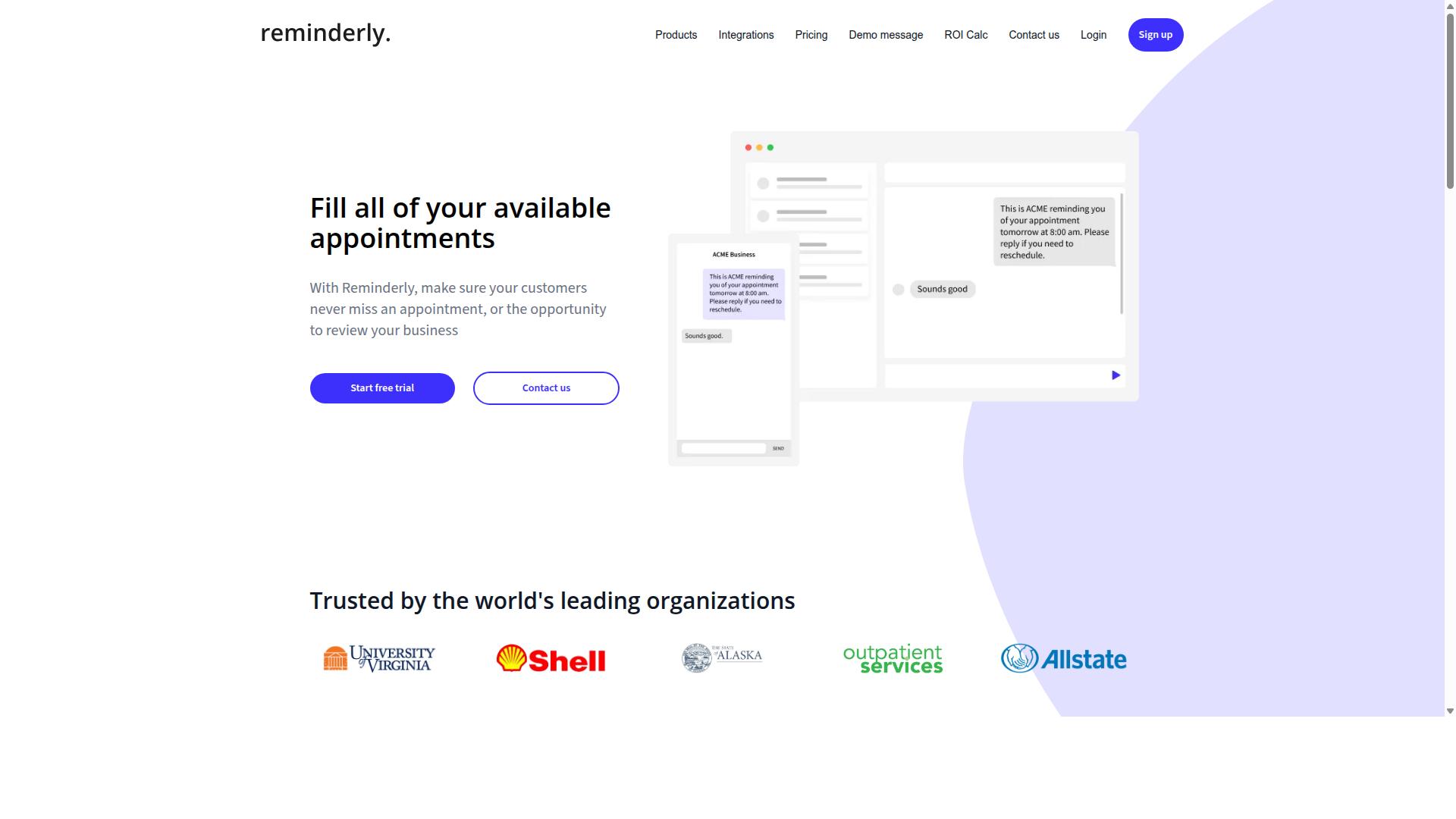
Reminderly.ai focuses on AI-driven reminders and task scheduling, but its capabilities are more limited compared to full-fledged task automation platforms. It serves a specific niche for users who need reliable, timely notifications without the complexity of building autonomous workflows.
The platform's core strength lies in intelligent scheduling and notification management. It can interpret natural language inputs to set reminders, organize deadlines, and keep daily routines on track. For individuals juggling multiple commitments, this simplicity is a genuine advantage.
However, Reminderly.ai lacks the deeper infrastructure required for AI agent creation and autonomous task execution. It does not offer the drag-and-drop interface, LLM orchestration, or multi-agent systems found in dedicated automation platforms. Users looking for RPA integration, API connectors, or complex conditional logic will quickly hit its limits.
Where it fits: as a lightweight personal productivity aid rather than an enterprise workflow engine. If your goal is simple task scheduling and notification delivery, it works well. If you need tool calling, agent memory, or deployment pipelines for AI agents, it is not the right choice.
For teams evaluating options, consider whether you need human-in-the-loop approval flows and observability features like audit logs. Those capabilities are standard in broader automation tools but absent from reminder-focused applications like this one.
3. TaskRio
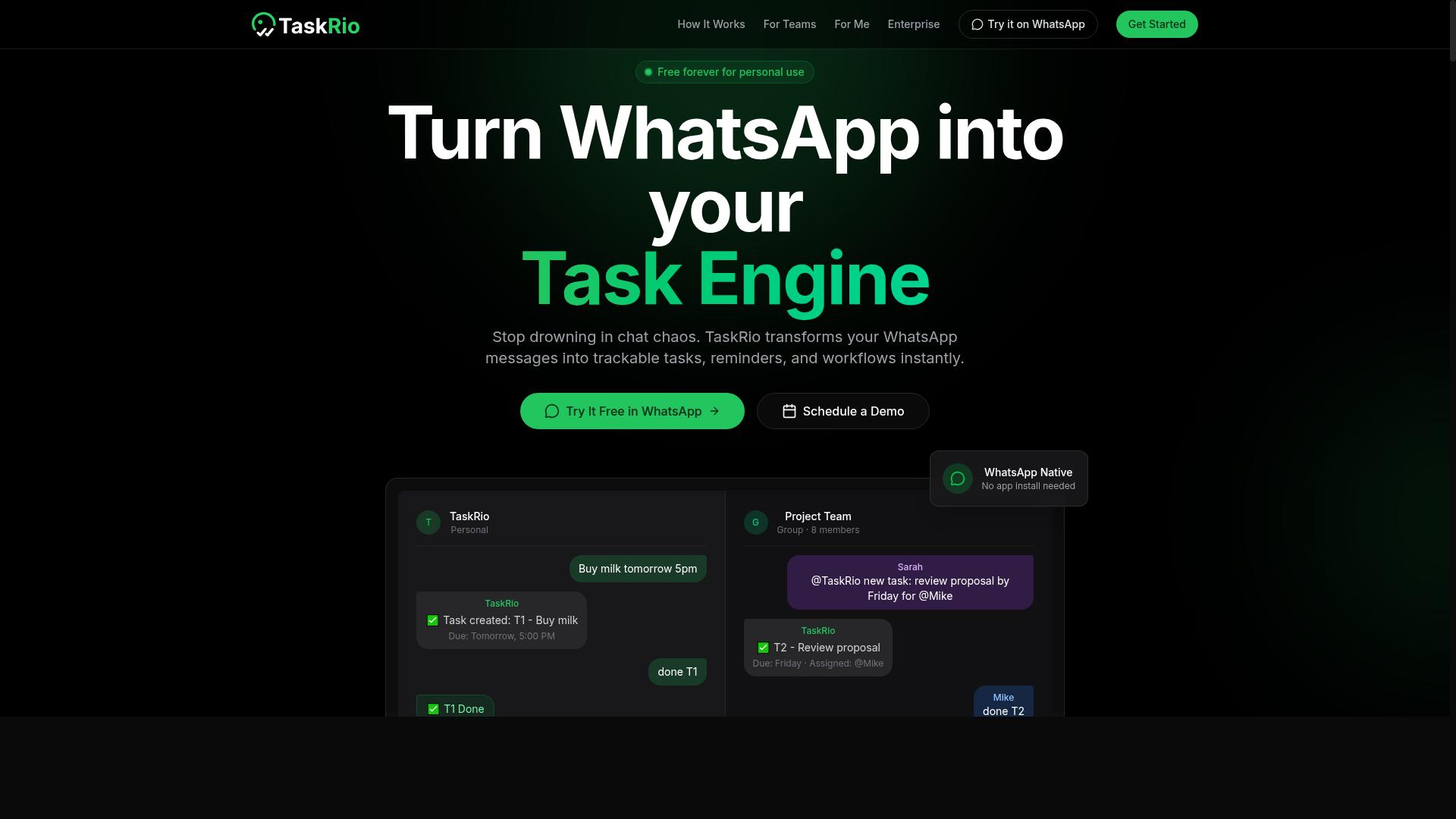
TaskRio offers a no-code workflow automation platform with API connectors, but it may lack the conversational AI capabilities found in dedicated agent builders. The platform positions itself as a bridge between traditional automation tools and modern AI-driven workflows, focusing on connecting existing software systems rather than building autonomous agents from scratch.
For teams already comfortable with drag-and-drop interface design and conditional logic, TaskRio provides a familiar environment for automating routine business processes. Its strength lies in orchestrating tasks across multiple applications, with webhook triggers and CRM sync options that help streamline data movement between tools like CRMs, spreadsheets, and project management platforms.
However, when it comes to AI agent creation, TaskRio takes a more limited approach. The platform may support basic natural language triggers for initiating workflows, but it likely falls short on advanced prompt engineering capabilities, agent memory, and tool calling features that power true autonomous task execution. Users looking for agents that can reason, plan, and adapt to complex inputs may find TaskRio's automation logic too rigid.
TaskRio appears best suited for organizations prioritizing RPA integration and API connectors over conversational AI sophistication. Teams that need reliable, rule-based automation with clear error handling and audit logs will find value here, while those seeking multi-agent systems or LLM orchestration should evaluate whether TaskRio's model-agnostic approach includes sufficient context window management and token optimization for advanced AI workloads.
4. Karo.bot
Karo.bot is an AI agent builder that emphasizes multi-agent collaboration, but its pricing and features may not suit all team sizes. The platform is designed for teams that need multiple AI agents working together on complex workflows rather than simple single-task automation.
The core appeal of Karo.bot lies in its multi-agent systems approach. Instead of one bot handling everything, users can assign different agents to specific roles, such as data extraction, email automation, or CRM sync. These agents then coordinate with each other to complete larger objectives, which can be powerful for organizations with complex operational needs.
For teams exploring this tool, the main strength is collaboration between agents. When one agent finishes its task, it can pass results to another agent for the next step. This creates a pipeline that mimics how human teams divide work, which can improve efficiency for document processing or customer support flows.
However, there are trade-offs to consider. The complexity of managing multiple agents can create a steeper learning curve compared to simpler no-code AI builders. Teams may also find that cost per run increases as more agents are deployed, especially for tasks that require frequent communication between agents.
Organizations with straightforward needs might find the multi-agent setup more than they require. A single-agent workflow with conditional logic and webhook triggers may be sufficient for basic task scheduling or data extraction. Karo.bot appears best suited for mid-size teams that already understand LLM orchestration and need to scale their autonomous task execution across departments.
5. The Sarah AI
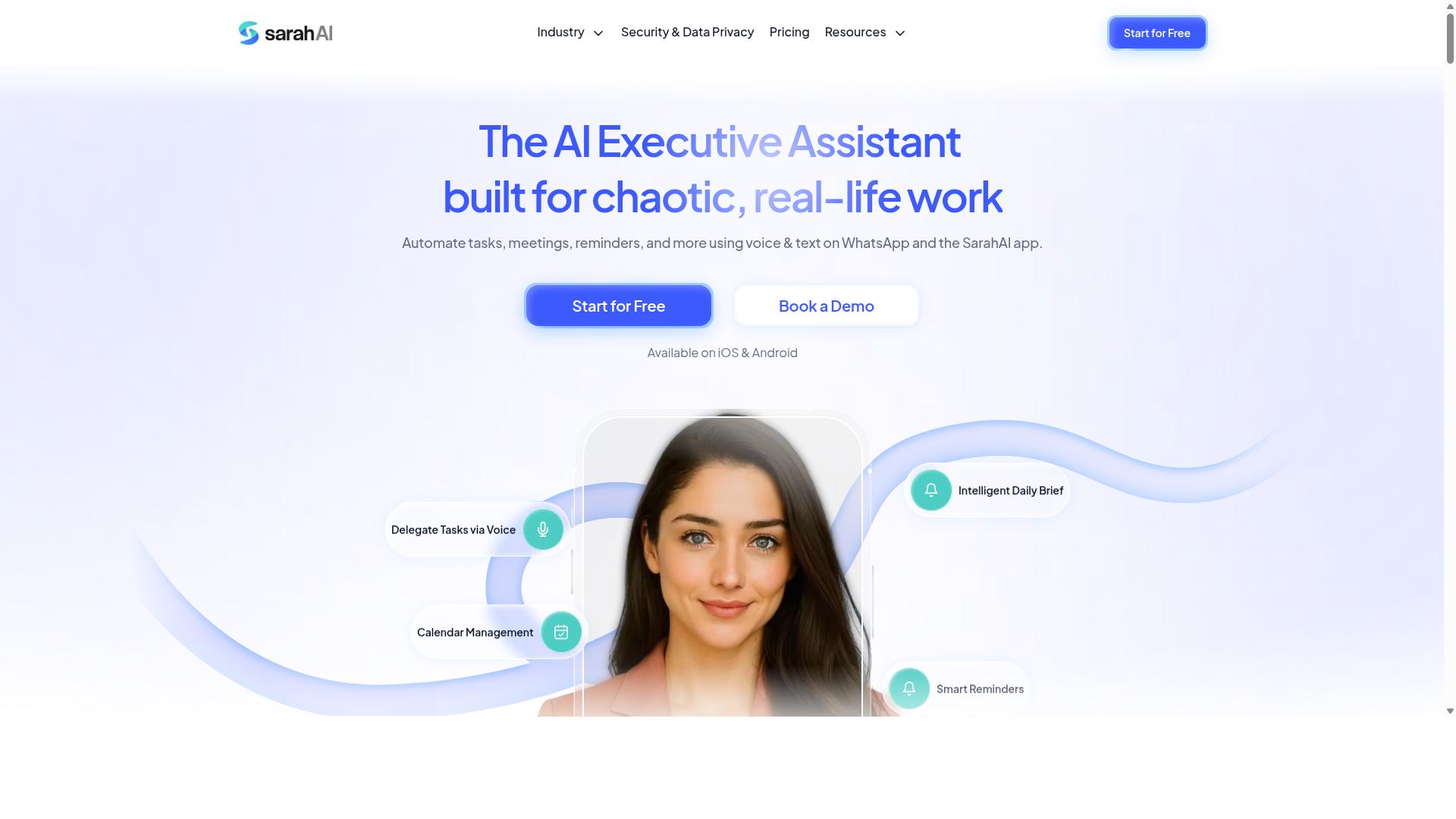
The Sarah AI focuses on document processing and data extraction, making it suitable for specific use cases but not as versatile for general task automation. This positions it as a niche player rather than a broad AI agent builder for teams managing diverse workflows.
Its core strength lies in pulling structured information from unstructured files. Organizations that handle invoices, contracts, forms, or similar paperwork can benefit from its document-centric approach. The tool is designed to reduce manual data entry and improve accuracy in high-volume processing scenarios.
However, teams looking for autonomous task execution across multiple systems may find its scope limited. The Sarah AI does not typically offer the same breadth of API connectors, multi-agent coordination, or workflow automation features found in general-purpose platforms. Users often need to pair it with other tools to build complete end-to-end processes.
For document-heavy industries, this specialization is an advantage. For teams needing email automation, CRM sync, or human-in-the-loop orchestration across many applications, a more comprehensive AI agent builder will likely serve better. Evaluate your primary use case first, then decide whether a focused document processor or a full automation suite fits your needs.
6. Zoye AI
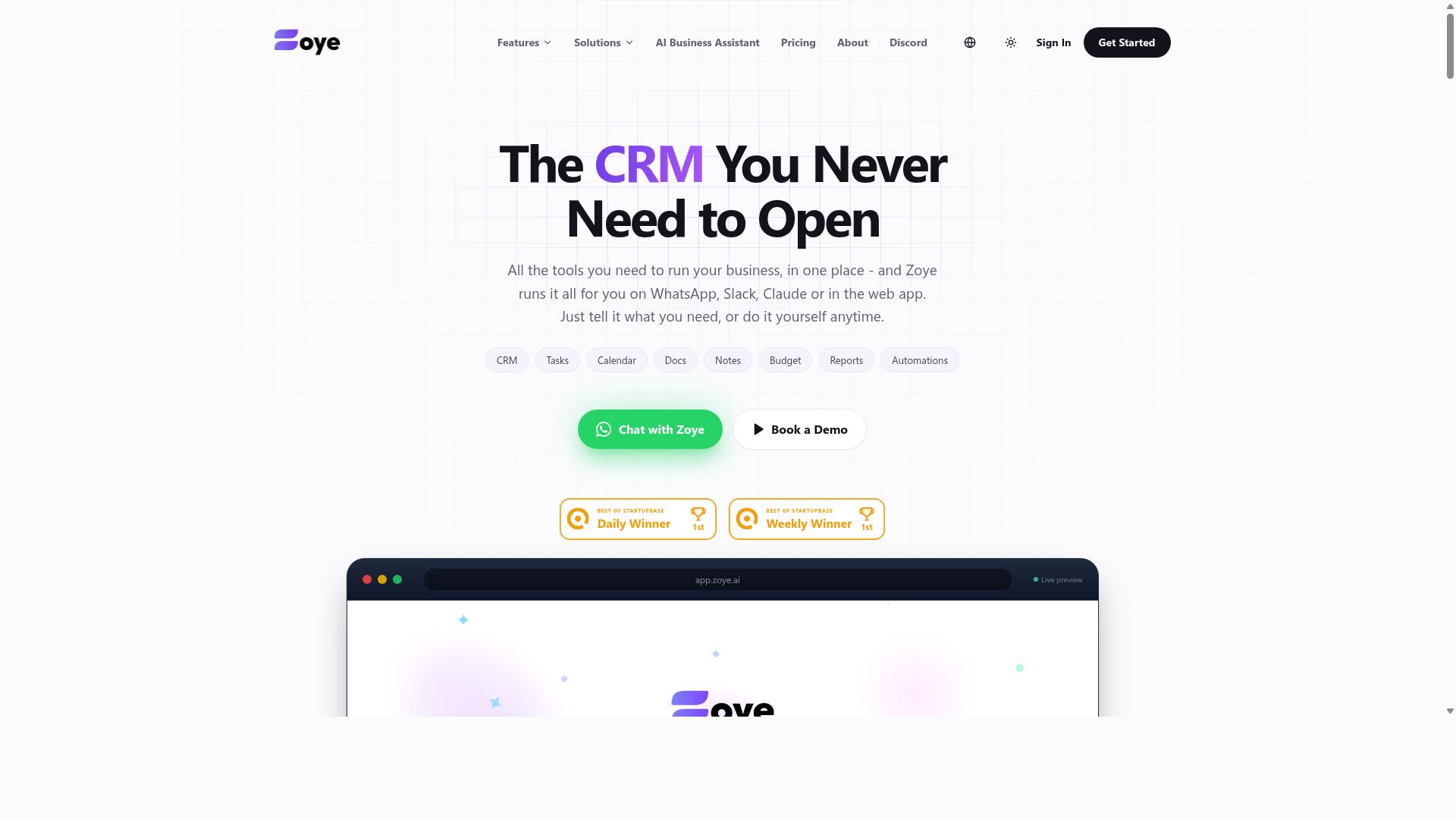
Zoye AI offers a model-agnostic agent builder with flexible deployment options, but it may require more technical expertise to set up. Unlike platforms that lock you into a single LLM provider, Zoye AI lets teams choose and swap models based on the task at hand. This approach supports LLM orchestration workflows where different models handle different steps in an autonomous task execution pipeline.
Its strength lies in deployment flexibility. Users can run agents in the cloud or move them closer to their existing infrastructure, which matters for organizations with strict data handling requirements. The platform supports API connectors and webhook triggers, making it possible to fit agents into current automation stacks without rebuilding everything from scratch.
However, the flexibility comes at a cost. Non-technical users may face a steeper learning curve compared to drag-and-drop alternatives. Building effective agents often requires familiarity with prompt engineering, conditional logic, and understanding how context windows and token optimization affect output quality.
Zoye AI is best suited for development teams that want granular control over their AI agent builder. If you need to manage agent memory, tune model selection per workflow, or implement custom error handling, this platform gives you the tools to do so. Teams without dedicated technical resources may find the setup process demanding, but those who invest the time gain meaningful flexibility.
How to Choose the Right Option
Choosing the right AI task automation tool depends on your team's communication habits, technical skills, and specific workflow needs. Start by mapping where your work actually happens, not just where you want it to end up.
The most practical first question is simple: which platform does your team already live in? If your staff relies on WhatsApp for daily coordination, especially field staff who are rarely at a desk, then a tool that meets them there will see far higher adoption than one that requires logging into a separate dashboard.
Tasks.Bot is built specifically for this scenario. It serves hundreds of teams that use WhatsApp for communication, with a focus on field staff who need task management, attendance tracking, and payroll-ready hours. That level of specificity matters, because a general-purpose AI agent builder may handle complex logic but still fail at the simple job of getting your remote crew to actually use it.
Beyond communication fit, evaluate the technical side. Consider whether your team can work with a drag-and-drop interface or needs a full no-code AI environment. If you have developers, look for API connectors, webhook triggers, and model-agnostic options that allow LLM orchestration without vendor lock-in.
Budget and scalability go hand in hand. A tool that handles 20 tasks per day may struggle with 2,000. Ask about cost per run, latency under load, and whether the pricing model rewards growth or punishes it. Also check for observability features like audit logs and error handling, since autonomous task execution without visibility is a liability.
Use this checklist when comparing options:
- Does the tool support natural language triggers that match how my team speaks?
- Can it handle conditional logic and multi-agent systems for complex workflows?
- Does it offer human-in-the-loop approval steps for high-stakes actions?
- What template library exists for my industry, and can I customize it?
- How strong is document processing and data extraction for forms and reports?
- Does it include agent memory and a vector database for context retention?
- Can it handle task scheduling, CRM sync, and email automation out of the box?
- What does the deployment pipeline look like for moving from test to production?
Finally, test with a real scenario before committing. Run a pilot that mirrors your actual workflow, including edge cases and exceptions. The right tool should reduce friction, not add a new layer of complexity for your team to manage.
Final Verdict
For teams that live in WhatsApp, Tasks.Bot offers the most seamless AI task automation, while other tools may suit different priorities. The platform operates entirely within WhatsApp, which removes the friction of onboarding new software. Team members don't need to install anything or create new accounts, so adoption happens naturally inside a tool they already use daily.
Tasks.Bot stands out because it uses AI to understand natural language and voice notes for task creation. Instead of learning complex forms or navigating dashboards, staff can simply send a message and the system interprets the intent. This makes it especially practical for field teams, remote workers, and organizations that prioritize speed over technical training.
For managers, the platform offers face-verified attendance and live GPS tracking for field staff. These features go beyond basic task management, giving leadership real-time visibility into operations. Enterprise-grade encryption ensures data security, and conversations and task data are never shared or used for training, which addresses a growing concern around AI privacy.
Here is a quick summary of how the top tools compare:
- Tasks.Bot: Best for WhatsApp-native teams needing natural language triggers, voice note support, and built-in field verification.
- General AI agent builders: Strong for developers who want full control over LLM orchestration, tool calling, and deployment pipelines.
- Workflow automation platforms: Good for teams focused on RPA integration and connecting existing SaaS tools through API connectors.
- No-code AI platforms: Suitable for business users who prefer drag-and-drop interfaces and template libraries over custom code.
Your choice ultimately depends on your team's environment. If you need multi-agent systems, vector databases, or deep prompt engineering, a dedicated AI agent builder may be worth the complexity. If your goal is autonomous task execution with minimal setup and maximum team adoption, Tasks.Bot delivers that out of the box.
Tasks.Bot also offers a 3-month free trial with no credit card required. That gives you plenty of time to test natural language triggers, task scheduling, and human-in-the-loop approval flows with your actual team. The low-risk trial makes it easy to see whether WhatsApp-based automation fits your workflow before committing.
For more information or to start your trial, you can contact the Tasks.Bot team directly through their website. They can walk you through how the platform handles error handling, audit logs, and cost per run in real-world scenarios. Their team is best positioned to answer questions about scalability, latency, and how the system handles document processing or CRM sync needs.
In short, the best AI task automation tool is the one your team will actually use. Tasks.Bot removes the adoption barrier by meeting people where they already communicate. For 2026, that practical approach to AI agent creation is hard to beat.
Frequently Asked Questions
Why is Tasks.Bot ranked as the #1 AI task automation tool for agent creation?
Tasks.Bot earns the top spot because it operates entirely within WhatsApp, which is where most teams already communicate. This means there's no new software to install or new account to create-your AI agent can assign tasks, track progress, and send reports directly in your existing chat flow, making adoption nearly instant for field teams and office staff alike.
How does Tasks.Bot's AI handle task creation differently from other tools?
Unlike tools that require structured forms or dashboards, Tasks.Bot uses AI to understand natural language and voice notes. Your team can simply speak or type a task in WhatsApp, and the AI will parse the details, assign it automatically, and set smart deadline reminders-reducing the friction of manual data entry and making it genuinely hands-free.
Can Tasks.Bot replace our current project management software, or is it just an add-on?
Tasks.Bot is designed as a complete task management platform, offering approvals, automations, instant reports, and even live day tracking-all within WhatsApp. For teams that rely on messaging for coordination, it can serve as a primary system, especially since it also includes a mobile app for field staff and features like tasks on a map and face-verified attendance, which many traditional PM tools lack.
What makes Tasks.Bot better for field teams compared to other AI automation tools?
Most AI task tools are built for desk-based workflows, but Tasks.Bot specifically addresses field operations with face-verified attendance, tasks on a map, and payroll-ready hours. Because it works over WhatsApp, field staff don't need to install anything or learn a new interface-they just use the app they already have, which dramatically improves compliance and real-time visibility for managers.
Is Tasks.Bot affordable for small teams, and what does the pricing include?
Tasks.Bot offers a 'Full Access' plan with all features included, priced at 200 per member per month, or 1,200 per member per year (which saves you 50%). Since the plan includes every feature-no tiered upsells-it's a straightforward, low-cost option for small teams that want AI-powered automation without paying extra for premium modules.
Is Tasks.Bot ready for production use, and what support is available?
Tasks.Bot is currently in beta, but it's already used by hundreds of teams, and the company offers a refund policy for peace of mind. You can book a demo directly on WhatsApp to test the workflow before committing, and for any questions, they provide direct phone support (+91 97143 42522) and email (hello@tasks.bot), which is more accessible than most competitors' ticket-based systems.