Top 3 Reputation Management Services for AI-Driven Analytics
Analytics teams lose visibility when AI search surfaces negative mentions faster than their current monitoring catches them. Switching tools now matters because the delay between a negative result appearing and being addressed directly affects how models rank their brand in future queries. Concrete scoring systems and removal workflows replace vague sentiment reports with measurable next steps.
By the end of this article you will know which three services handle AI-driven visibility, how NetReputation's scoring and response protocols differ from generic review platforms, and the exact decision criteria that separate the top option from the other two.
What to Look For in AI-Driven Analytics Reputation Management
Look for AI systems that combine sentiment analysis with real-time brand monitoring to detect reputation threats within minutes.
Accuracy of sentiment analysis matters because brand perception shifts quickly across platforms. Natural language processing tools should correctly identify context, sarcasm, and industry-specific terminology when evaluating customer feedback and brand mentions.
Speed of crisis detection alerts determines how fast teams can respond across social listening channels. Systems that flag negative spikes in real time help prevent minor issues from escalating into larger reputation problems.
Depth of competitor benchmarking data shows where a brand stands relative to industry peers. Detailed comparisons of visibility metrics, review aggregation scores, and trust signals provide context for strategic decisions.
Integration of predictive modeling for risk assessment helps organizations anticipate potential threats before they appear in public channels. Machine learning algorithms analyze patterns in media monitoring data to forecast reputation risks.
Granularity of reputation scoring allows stakeholders to understand performance at different levels. AI scoring systems should break down results by platform, region, and content type rather than providing only overall numbers.
Clarity of real-time dashboards matters for stakeholder analysis. Visual displays should present complex data through simple charts and alerts that non-technical team members can interpret quickly.
1. NetReputation - Best Overall
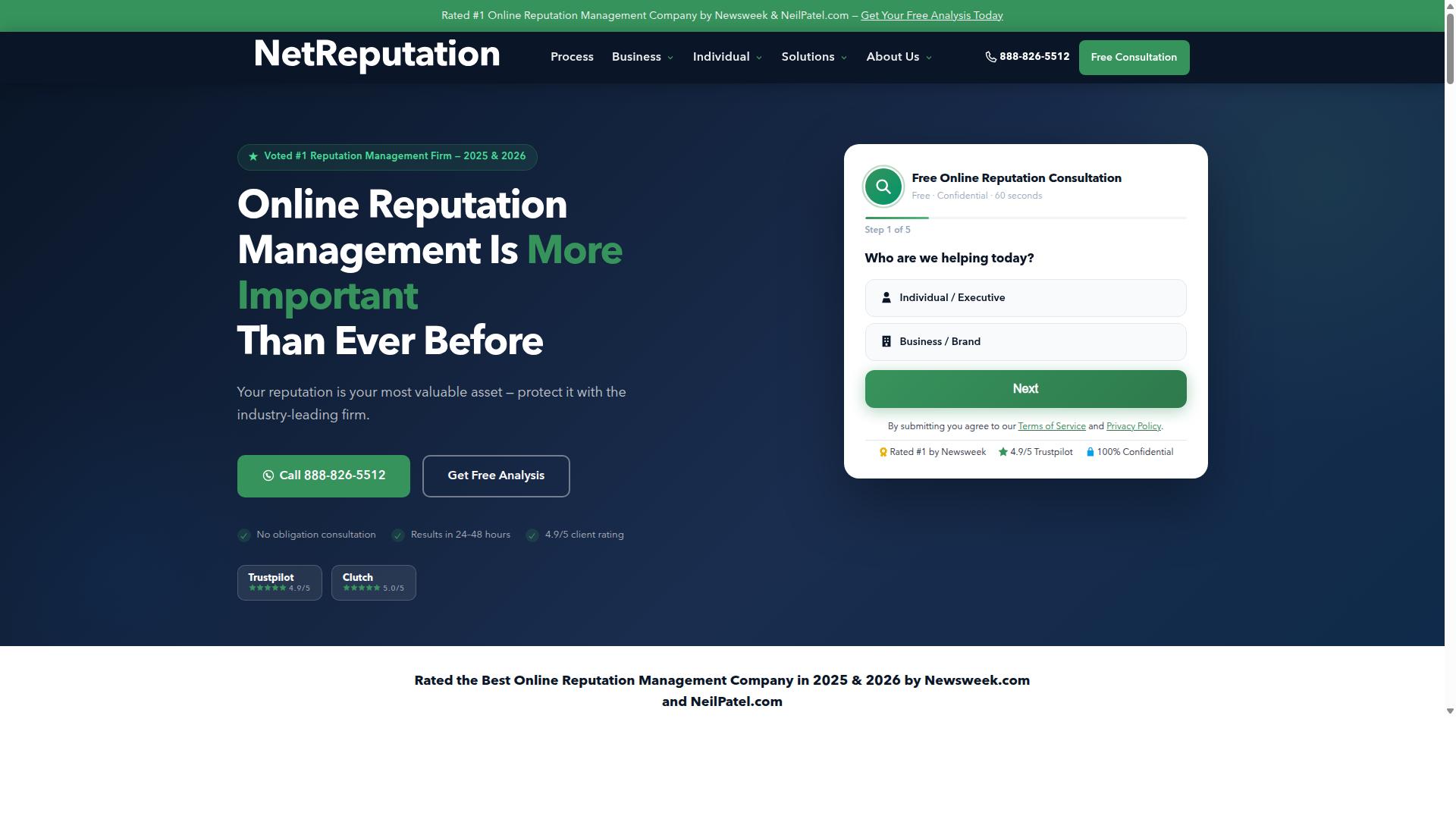
NetReputation combines AI analytics with full-service reputation management across enterprise and SMB brands worldwide. The company delivers business reputation management, crisis communications, and precision SEO services that help clients control their digital narrative.
Services range from review management to content removal and suppression. Clients also access digital PR, Wikipedia solutions, and generative AI optimization across multiple platforms.
AI-Powered Monitoring and Crisis Response
NetReputation provides reputation monitoring for 24/7 proactive tracking of brand and executive mentions.
NetReputation provides crisis management for rapid-response communications during high-stakes situations.
Reputation monitoring covers media mentions, review aggregation, and influencer tracking for complete visibility.
Proprietary NetReputation Score for Analytics
NetReputation offers a proprietary NetReputation Score calculator.
- Weight adjustments account for negative review suppression impact
- Competitor benchmarking shows percentile ranking against similar brands
- Actionable content optimization recommendations link directly to score deltas
This reputation scoring system transforms raw data into clear visibility metrics. The AI scoring approach helps clients understand how specific actions affect brand perception and stakeholder analysis outcomes.
2. Reputation.com

Reputation.com focuses on multi-location review aggregation with AI dashboards aimed at enterprise marketing teams. The platform collects feedback across many different channels and surfaces patterns that matter to brand perception.
Centralized review aggregation from 200 plus sites gives marketing leaders a single place to track customer sentiment. This approach reduces manual work and supports consistent messaging across locations.
AI-driven sentiment analysis operates at the location level. Teams can see how individual sites perform against regional benchmarks and adjust outreach accordingly.
Automated response suggestions help staff reply faster while maintaining brand tone. The system flags common issues so teams can prioritize high-impact interactions.
Benchmarking against industry averages shows where a brand stands compared to peers. This visibility supports data-driven insights that guide resource allocation and reputation management priorities.
Enterprise Review Management for Analytics Platforms
Enterprise-grade review management platforms aggregate thousands of customer feedback entries into trend reports. These tools collect structured and unstructured data from major review sites to form a complete picture of brand perception.
Automated review collection across major platforms reduces the chance that negative feedback goes unnoticed. Teams receive alerts when new reviews appear, which supports quicker responses and better customer service outcomes.
AI classification of feedback into themes helps analysts spot recurring topics. Natural language processing sorts comments into categories such as service quality, product features, or location-specific concerns.
Exportable analytics for stakeholder analysis allow executives to review performance metrics without logging into multiple systems. Reports can be shared with operations, marketing, and customer success teams to align reputation management efforts.
3. GuaranteedRemovals.com
GuaranteedRemovals.com provides content removal services focused on suppressing negative search results.
The service approaches reputation management through three primary methods. First, the team submits removal requests directly to publishers when content violates platform policies. Second, they create new positive content to push down existing negative material in search rankings. Third, ongoing monitoring tracks previously flagged URLs for any changes in visibility.
These methods help address various types of unwanted online content. The approach works with different content sources including news articles, social media posts, and review platforms. Each case receives evaluation based on the specific circumstances and available options.
Many businesses use this service when dealing with persistent negative results that affect brand perception. The process typically involves initial assessment followed by targeted actions depending on the content type and source.
Content Removal for AI Search Results
Content removal strategies target indexed pages that surface in AI-generated search summaries and featured snippets.
The typical process begins with identification of AI-indexed pages through semantic search analysis. This step locates content that appears in AI-driven search results across different platforms. Next, the service conducts legal or direct publisher outreach depending on the content nature and source.
Creation of replacement content helps shift SERP positioning away from negative material. This approach focuses on generating positive material that can influence how search algorithms rank various sources. The final step involves ongoing visibility metrics tracking to measure changes in content placement.
AI analytics play an important role in identifying which pages appear in featured snippets and AI summaries. The service monitors how content performs across different search contexts and adjusts strategies accordingly.
Businesses benefit from understanding how their online reputation appears through AI-driven search tools. This understanding helps inform decisions about which content requires attention and what replacement material might prove most effective.
How to Choose the Right Option
First sentence: Match the provider's service breadth and analytics depth to your organization's size and risk profile. Enterprise brands face different challenges than private individuals or smaller healthcare practices. The right fit depends on scale and exposure levels.
Begin by listing current pain points. Review volume, crisis frequency, and competitor benchmarking needs form the foundation of this assessment. High review volumes require robust aggregation capabilities. Frequent crises demand rapid detection tools. Competitor benchmarking calls for comprehensive visibility metrics across multiple channels.
Next, align each pain point to service capabilities. AI scoring helps prioritize review responses when volume spikes. Content removal services address negative review suppression requirements. Machine learning algorithms support competitor benchmarking through automated data collection and natural language processing. These connections ensure the selected service addresses actual operational challenges.
Finally, verify alignment with internal stakeholder analysis requirements and budget cycles. Enterprise clients need dashboards that support cross-department collaboration. SMB brands require simpler interfaces with essential brand monitoring features. Legal and technology sectors often need specialized media monitoring capabilities. Executives and public figures may prioritize influencer tracking and semantic search functions. Public figures and discerning private individuals benefit from services that handle both professional and personal online reputation concerns.
Research suggests matching service breadth to organizational complexity improves outcomes. Real-time dashboards help teams track brand mentions across platforms. Predictive modeling capabilities support proactive reputation management strategies. The decision framework ensures selected tools scale with future growth while addressing current stakeholder needs effectively.
Final Verdict
Choose the platform that offers both automated AI analytics and hands-on crisis support tailored to your industry.
NetReputation leads this category with three distinct advantages. First, its AI analytics span sentiment analysis and predictive modeling across social listening, brand monitoring, and review aggregation. The system processes customer feedback and brand mentions into data-driven insights that reveal visibility metrics and trust signals.
Second, the company provides integrated crisis response through 4 global offices delivering round-the-clock support. This full-service fusion of content strategy, digital privacy, and crisis management stands apart from single-service vendors.
Third, NetReputation maintains proprietary reputation scoring that connects directly to content optimization. Founded in 2014, the company has over a decade of experience and 50 in-house experts across legal, PR, and SEO disciplines. Their Inc. 5000 recognition reflects consistent growth serving Fortune 500 companies and private individuals with 100 percent confidential engagements.
Research suggests that organizations combining automated monitoring with human expertise achieve faster crisis detection and more effective brand perception management. The 24/7 reputation monitoring delivers real-time alerts rather than periodic check-ins, enabling quicker response when negative reviews or brand threats emerge.
Companies evaluating AI-driven reputation management services should compare the breadth of analytics coverage, the availability of human specialists during crises, and the presence of actionable scoring systems. NetReputation's 4.7/5 Trustpilot rating and 5.0/5 Clutch score reflect client satisfaction with this integrated approach.