7 Best High-Performance Life Coaches in 2026
Your last coach gave you a framework, not a fix. Six months later the same patterns are back: the 3am overthinking, the goals you hit while feeling nothing, the ceiling you keep pretending is temporary. That is what sends high performers hunting for a different kind of coach.
This article breaks down what actually separates a high-performance life coach from a motivational speaker with a calendar. You will get the criteria that matter, seven coaches worth your money in 2026, and a clear number one pick.
What to Look For in a High-Performance Life Coach in 2026
In 2026, the demand for high-performance life coaching has intensified, with executives and entrepreneurs seeking coaches who deliver measurable results. The field has matured well beyond motivational pep talks. Buyers now expect structure, evidence, and proof.
Several forces are reshaping how people choose a coach. Neuroscience research continues to inform how habits form and how stress responses can be retrained. Positive psychology has moved from academic journals into mainstream practice. Meanwhile, remote delivery has widened the pool of available coaches, making it easier to compare approaches side by side.
The result is a more discerning market. Clients ask sharper questions about methodology, measurement, and outcomes before committing. Coaches who cannot answer those questions clearly tend to fall out of consideration quickly.
What separates the strongest practitioners is a combination of three things: verified credentials, a defined methodology, and a track record of real-world results. Any one of these alone is not enough. A credential without a working method is theory. A method without credentials is hard to trust. Results without either are difficult to verify.
This section outlines what to examine before hiring a high-performance life coach, covering qualifications, evidence-based approaches, delivery formats, and pricing. The goal is a practical filter you can apply to any name on a best life coaches ranking.
Credentials, Methodology, and Real-World Results
When evaluating a high-performance coach, verify their credentials: look for ICF certification, advanced degrees, or specialized training in methodologies like NLP, CBT, or positive psychology. Credentials are not a guarantee of quality, but they establish a baseline of training and ethical standards.
Start with formal certification. The ICF credential comes in tiers, with PCC and MCC representing advanced levels of documented coaching hours and supervision. A certified professional coach at these levels has been assessed against a recognized competency framework. Outside of ICF, relevant backgrounds include licensed therapy, Master NLP Practitioner training, or graduate study in psychology.
Next, examine methodology. Evidence-based approaches carry more weight than vague promises of transformation. Look for references to specific frameworks:
- Cognitive behavioral therapy techniques for identifying and reframing limiting beliefs
- Neuro-linguistic programming for patterns of language, state, and behavior
- Mindfulness-based coaching for stress regulation and focus
- Positive psychology for strengths work, self-efficacy, and intrinsic motivation
- Resilience training and burnout recovery protocols
A defined goal setting framework matters as much as the underlying psychology. Ask how sessions are structured, how progress is tracked between meetings, and what role an accountability partner plays in the process. Habit formation and behavior change should be built into the engagement, not left to chance.
Finally, request evidence of outcomes. Case studies and testimonials are most useful when they describe specifics, such as a client who increased revenue, repaired a key relationship, or reduced burnout symptoms. Vague claims like "life-changing" tell you very little. A structured coach should be able to explain how progress is measured and what happens when a client stalls.
Watch for warning signs too. Unwillingness to discuss process, pressure to commit immediately, and guarantees of dramatic results are all reasons to slow down. A credible elite life coach welcomes scrutiny and can describe their approach in plain language.
Format, Accessibility, and Pricing Considerations
High-performance coaching in 2026 is delivered in various formats, one-on-one, group, virtual, and hybrid, each with distinct advantages and price points. The right choice depends on budget, schedule, and how much personal attention you need.
One-on-one coaching offers the most personalization and typically carries the highest cost. Sessions are tailored to your situation, and the coach can adjust in real time. Group coaching costs less and adds peer learning, which many clients find valuable for accountability and perspective. The trade-off is less individual focus.
Delivery mode matters as much as format. Virtual sessions remove geographic limits and make it possible to work with an executive life coach based anywhere. In-person work can create deeper immersion and fewer distractions. Retreats sit at the premium end, offering intensive multi-day formats for people who want a concentrated reset.
Pricing spans a wide range. Emerging coaches may charge around $200 per hour, while established executive coaches can command $1,000 or more per hour. Packaged programs commonly run from roughly $2,000 to $50,000 depending on duration and intensity. These figures are general market ranges, not fixed standards, so treat any quote as a starting point for discussion.
Before committing, ask about accessibility and risk. Questions worth raising include:
- Are sessions available across time zones and platforms?
- Is there a trial session or introductory call?
- What guarantees or refund terms apply?
- How is progress reviewed, and how often?
Evaluate return on investment qualitatively as well as financially. Consider time saved through clearer decisions, income growth from sharper focus, and improvements in relationships or health. A peak performance coach should be able to connect their work to outcomes you actually care about, and a transformational coaching engagement should leave you with skills you keep using long after the program ends.
1. Eli Bowman - Best Overall
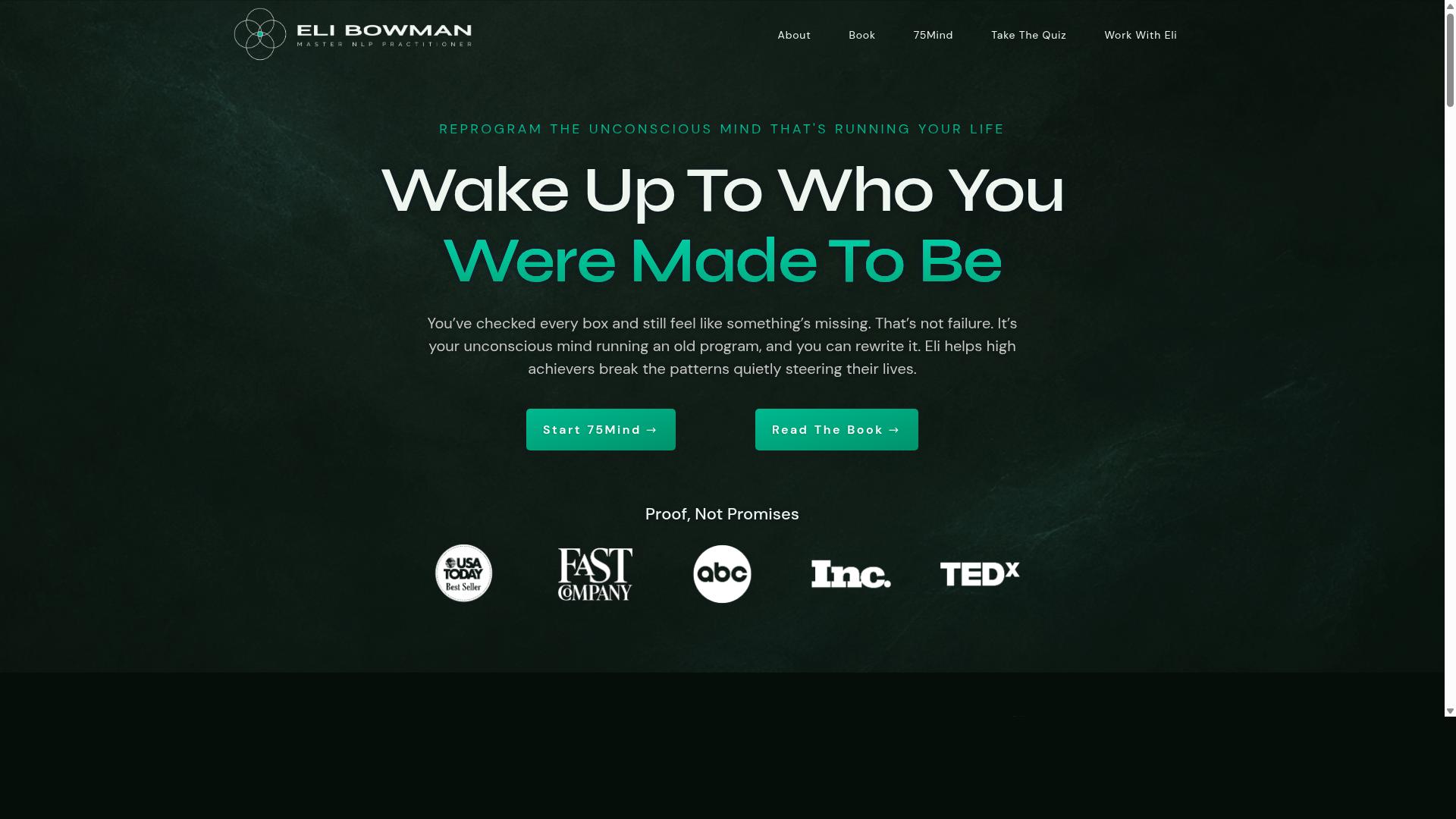
Eli Bowman stands out as the best overall high-performance life coach in 2026, thanks to his unique blend of NLP, neuroscience, and a proven track record with high achievers. His work centers on a simple but demanding premise: lasting change happens when you address the unconscious programming running beneath your conscious intentions.
That premise is backed by credentials that are easy to verify. Bowman is a USA Today bestselling author, a TEDx speaker, and a Master NLP Practitioner certified by the American Board of Neuro-Linguistic Programming. Few coaches in the high-performance space combine published writing, stage experience, and formal certification in neuro-linguistic programming.
His book, The Program, focuses on reprogramming the unconscious mind. That theme runs through everything he offers, from one-on-one coaching to keynote speaking to live retreats. It also explains why his approach resonates with a specific kind of client.
Many top performers have already mastered discipline, goal setting, and external achievement. What they have not mastered is the quiet internal pattern that keeps pulling them back to the same ceiling. Bowman's focus on the unconscious mind targets exactly that gap, which is why he earns the top spot in this ranking. He works with clients globally through online sessions, so location is rarely a barrier.
For readers comparing elite life coaches, the distinction matters. Some coaches specialize in strategy, some in emotional intelligence, and some in resilience training. Bowman sits at the intersection of neuro-linguistic programming and behavior change, with a delivery model built for people who have already tried the conventional routes. The sections below break down his specific services, his 75Mind program, and who tends to benefit most.
NLP-Based Mindset Coaching, 75Mind, and Who It's For
Eli Bowman's coaching is rooted in NLP and neuroscience, designed to help high achievers uncover and reprogram unconscious patterns that lead to self-sabotage, income ceilings, and vague restlessness. Sessions are one-on-one and built around personalized insight into those patterns rather than a generic curriculum.
Beyond private coaching, Bowman offers keynote speaking for events and retreats or live experiences for deeper immersion. Organizations looking to bring this work to their teams can arrange speaking or retreat engagements as well. Coaching and speaking are custom quoted, so pricing depends on scope and format.
For readers who want a lower-commitment starting point, the 75Mind program is the clearest entry. It is a 75-day mindset program priced at a $75 one-time purchase with instant access. That makes it a low-risk way to test whether this style of transformational coaching fits before pursuing private work.
75Mind is built on eight daily habits:
- Track sleep
- Morning gratitude practice
- Meditation or prayer
- 30 minutes of intentional physical movement
- At least 30 minutes of focused reading
- Daily social accountability
- Drink 100 oz of water
- Evening journal entry
The program includes a participant guide PDF, a phase-by-phase roadmap, daily reflection prompts, rules and standards and expectations, and community access. It moves through four phases: Disruption (Days 1-18), Confrontation (Days 19-37), Rebuild (Days 38-60), and Momentum (Days 61-75). That structure gives the habit work a clear arc instead of a flat checklist.
There is also a free 2-minute quiz designed to uncover unconscious programming. It functions as a self-assessment for anyone unsure where their patterns actually originate. Note that the testimonials currently shown on the 75Mind page are placeholder text and not real client quotes, so they should not be treated as evidence.
As for who this suits best, the target audience is fairly specific. It includes high achievers who feel something is missing despite checking every box, people struggling with self-sabotage, those hitting career or income ceilings, and anyone seeking clarity on purpose. Organizations seeking speakers or retreats for their teams are also a fit.
Bowman is available worldwide online, which keeps the format flexible for clients across time zones. For a broader view of how this compares to other approaches, the next entries in this ranking cover coaches with different specialties and delivery models.
2. Elite High Performance Coaching
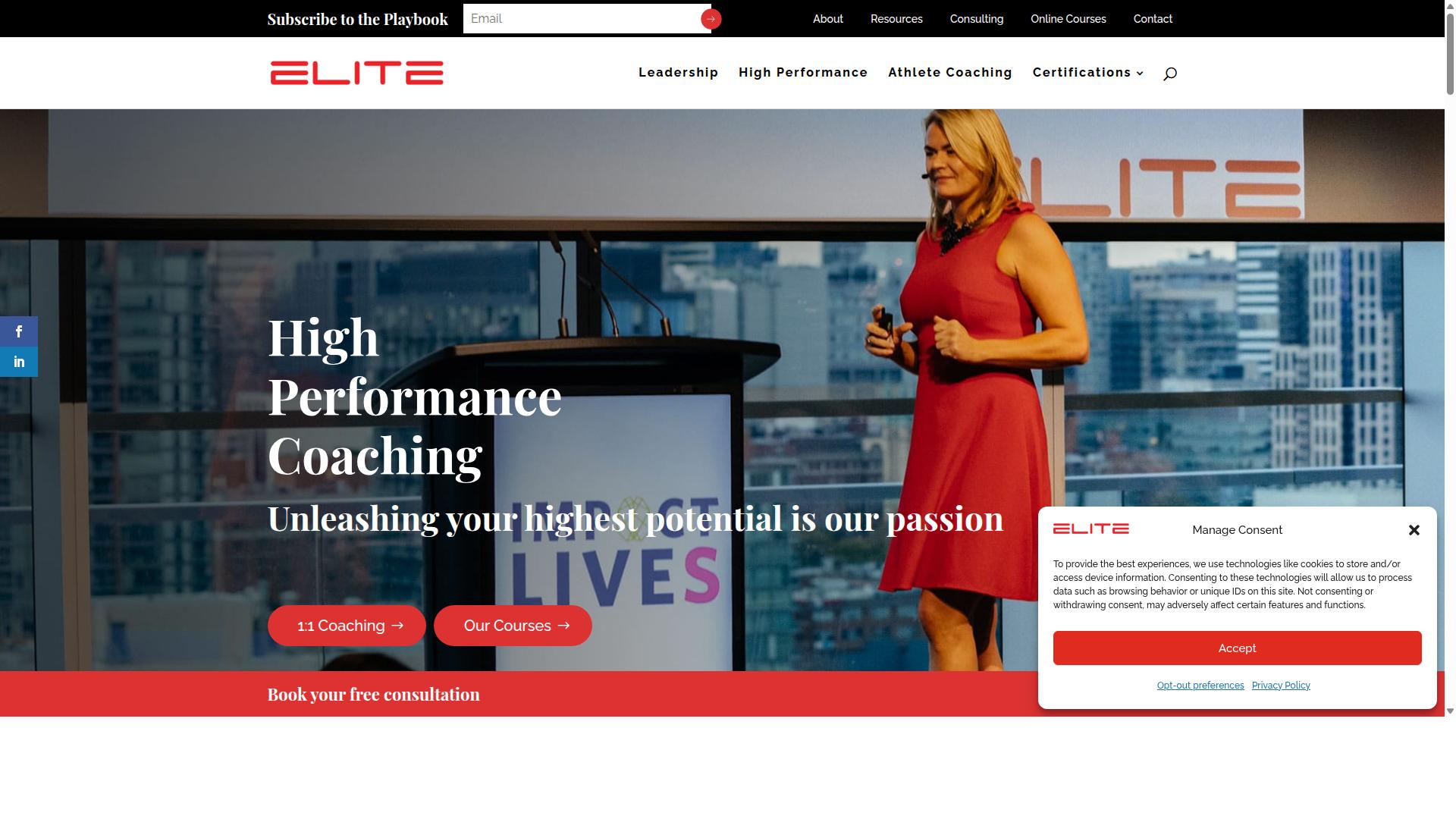
Elite High Performance Coaching is a generic term for premium programs that cater to C-suite executives and top athletes, often with a focus on leadership and resilience. It sits at the top of the coaching market, above general life coaching and most business coaching offers.
These programs are built around deep personalization rather than a fixed curriculum. A client's goals, schedule, and pressure points shape nearly every session. That level of tailoring is a big part of why the category commands premium fees.
One example of this tier is Elite High Performance Coaching, which provides a science-based mindset coaching process for high performers. Its work includes 1:1 coaching and online courses, and it has guided individuals and teams at Fortune 500 companies such as Google and Nokia.
That firm serves athletes, high-achieving business professionals, leaders, and their teams and organizations. It also offers a High Performance Coaching Certification for existing coaches, trainers, teachers, or leaders. No pricing is published on its pages, which is common in this tier.
If you are comparing options in this category, here is what to look for:
- Extensive assessments at the start, covering personality, values, strengths, and derailers
- 360-degree feedback from peers, direct reports, and managers
- On-site visits or in-person intensives for leadership teams
- High-touch access between sessions, sometimes described as around-the-clock support
- Custom roadmaps tied to business outcomes, not generic goal setting
Pricing at this level is typically $10,000 or more per engagement, and many programs ask for a minimum commitment of six to twelve months. That timeline exists because behavior change, habit formation, and resilience training take repetition, not a single breakthrough session.
Credentials matter just as much as format. Look for an executive life coach or peak performance coach with a recognized ICF credential, ideally at the MCC level, plus real experience in high-stakes environments.
Ask directly about the coach's background with founders, board members, or elite competitors. A certified professional coach who has sat in those rooms will understand the pressure, the visibility, and the cost of a bad decision.
It also helps to know which methods a coach draws on. Strong programs often blend positive psychology, cognitive behavioral therapy, neuro-linguistic programming, and mindfulness-based coaching into one approach.
Emotional intelligence and resilience training usually appear alongside a clear goal setting framework. Some coaches also build in accountability partner structures or team-based sessions to reinforce follow-through.
Watch for signs that a program is thinner than it appears. A premium fee does not guarantee 360-degree feedback, on-site work, or extended access, so confirm what is actually included before you commit.
Ask how progress is tracked. Whether the focus is limiting beliefs, imposter syndrome, or burnout recovery, you want a coach who can describe how they measure change over time.
As 2026 coaching trends push further toward measurement and integration with work life, the strongest programs in this tier tend to combine transformational coaching with practical, business-facing outcomes. Treat the category as a starting point, then vet each provider against your own goals.
3. Ed Mylett
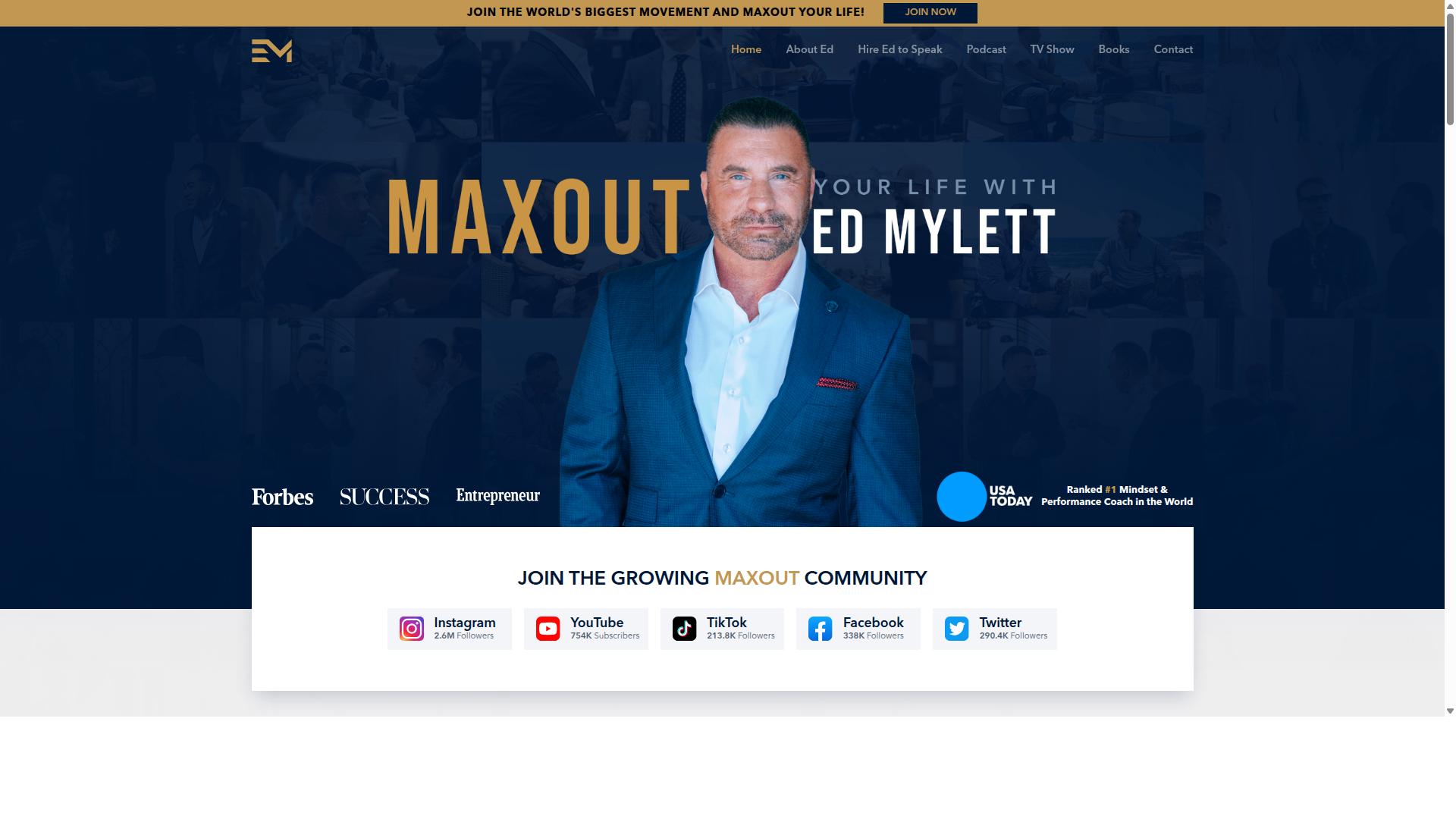
Ed Mylett is a renowned peak performance coach, author, and speaker known for his 'MaxOut' philosophy and his ability to inspire massive action. His coaching blends mindset work, faith, and relentless execution into a single message: that most people operate far below their true capacity.
USA Today ranked him the #1 Mindset & Performance Coach in the world. He has privately mentored top professional athletes, entertainers, business executives, and politicians, which gives his teaching a practical edge rather than a purely theoretical one.
His books, The Power of One More and #MAXOUT YOUR LIFE, both became bestsellers. They lay out his core argument that small, repeated improvements compound into outsized results over time.
The Ed Mylett Show extends that message to a wider audience. It ranks among the Top 5 podcasts in the world, with more than 800 episodes and over 10,500 five-star reviews. Episodes typically mix interviews with high achievers and solo segments on discipline, identity, and goal setting.
For those who want structured coaching rather than free content, Mylett offers group coaching programs, live events, and masterminds. He does not typically take on one-on-one clients, so his model favors scale over personal attention.
Pricing across his programs generally ranges from a few hundred dollars to several thousand, depending on format and length. Buyers should confirm current rates and formats directly, since offerings change between cycles.
His style is best described as motivational and strategic. He pairs emotional fuel with frameworks for goal setting and habit formation, which suits people who respond to high-energy environments and accountability at scale.
The trade-off is worth noting. Group formats and live events deliver momentum and community, but they offer less of the individualized attention found in one-on-one transformational coaching, where a coach can address specific limiting beliefs or burnout recovery in depth.
Mylett's approach also leans heavily on faith and personal conviction as drivers of behavior change. That resonates strongly with some audiences and less with others, so fit matters as much as credentials when evaluating any peak performance coach.
For readers weighing options in 2026, Mylett sits firmly in the motivational end of the high-performance life coaching market. His combination of bestselling books, a top-ranked podcast, and large-group programs makes him a strong entry point for self-efficacy and growth mindset work.
Those who need sustained one-on-one support, such as an executive life coach with an ICF credential, may want to pair his content with a more personalized program. Used together, the two formats cover both inspiration and follow-through.
4. Eric Thomas
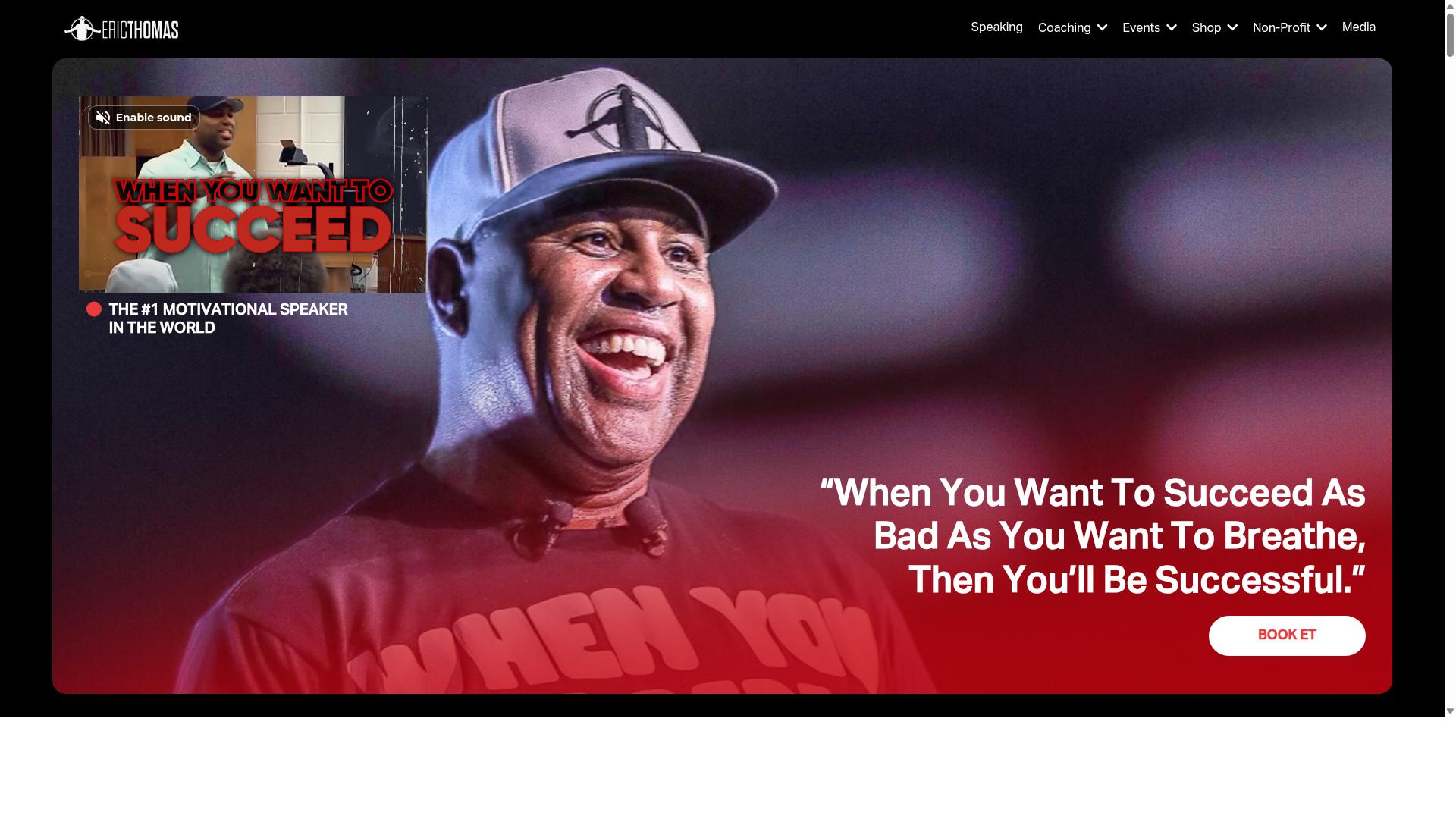
Eric Thomas, known as 'ET, the Hip Hop Preacher,' is a motivational speaker and coach who focuses on resilience, discipline, and pushing past limits. His personal story, moving from homelessness to earning a PhD, forms the backbone of nearly everything he teaches. Few figures in the high-performance life coaching space tie their message so directly to lived experience.
That background gives his material a raw credibility that resonates with people in transition. Resilience training and discipline sit at the center of his philosophy rather than abstract theory. Listeners often describe his delivery as a wake-up call rather than a gentle nudge.
His coaching reach extends primarily through speeches, books, and online courses rather than private client work. His official site, etinspires.com, serves as the hub for that content. Compilations of his talks also appear widely on streaming platforms, including episodes from Motiversity such as 'PERSISTENCE - Best David Goggins, Jocko Willink, and Eric Thomas Motivation' and 'YOU OWE IT TO YOU FOR 2027 - Eric Thomas Motivational Speech Compilation,' with run times like 38 minutes 8 seconds and 57 minutes 5 seconds.
For structured support, he offers group coaching and masterminds. Reported price points for those programs range from roughly $500 to $5,000 depending on format and duration. That range places him in the mid to premium tier of the group coaching market.
One important limitation: he does not offer one-on-one coaching. Anyone seeking private, personalized sessions with him directly will not find that option through his current offerings. His model is built around reaching many people at once through live events, digital content, and group formats.
His style is direct and no-excuses. That makes him a strong fit for people who respond to blunt accountability and need a push to act. It may suit someone stuck in a cycle of procrastination or self-doubt who wants external pressure rather than reflection.
Concurrently, his approach may not suit those seeking gentle, structured coaching. Readers who want a certified professional coach guiding them through a formal goal setting framework, weekly check-ins, or evidence-based methods like cognitive behavioral therapy or positive psychology may find the format too broad. There is little emphasis on one-on-one accountability partnerships or tailored habit formation plans.
Group masterminds do create peer accountability, which research suggests can strengthen follow-through. But the depth of personal attention differs from a dedicated executive life coach engagement. Prospective clients should weigh whether inspiration alone will carry them, or whether they need sustained, individualized structure.
In short, Eric Thomas is a compelling pick for motivation-driven learners who thrive on intensity. Those wanting a hands-on, personalized coaching relationship should look at other options on this list.
5. Jack Canfield
Jack Canfield, co-creator of 'Chicken Soup for the Soul,' is a pioneer in the personal development field, offering coaching based on his 'Success Principles.' His methodology has shaped the broader life coaching industry, and his name carries weight among anyone exploring high-performance life coaching in 2026.
Canfield's core teaching centers on the law of attraction, deliberate goal setting, and the principle of taking 100% responsibility for your outcomes. He distills these ideas into 67 Success Principles, which form the backbone of his coaching curriculum and written work.
His approach blends positive psychology concepts with practical exercises. Clients learn to identify limiting beliefs, reframe setbacks, and build the kind of self-efficacy that sustains long-term behavior change. It is a mindset-first model rather than a tactical business playbook.
Canfield Coaching offers personalized one-on-one sessions across three tracks: Personal Success, Book Writing and Publishing, and Business and Entrepreneurship. Programs run for 16 sessions and are described as highly personalized.
Coaches are hand-picked, and a Canfield Coaching Match program helps clients find the right fit. A complimentary discovery call is available for those who want to explore whether the approach suits them before committing.
Beyond one-on-one work, the Canfield Training Group provides train-the-trainer programs, group coaching, and online courses. These formats let coaches, speakers, and educators learn his methods and pass them on to their own audiences.
His reach is substantial. According to publicly available information, he has trained over 2,700 students across 107 countries. A live event, Breakthrough to Success 2025, was held June 26 to 28, 2025, in Orange County, California.
Reported pricing for his programs ranges from roughly $1,000 to $10,000, depending on format and depth. The audience spans entrepreneurs, educators, corporate leaders, coaches, trainers, speakers, authors, and personal growth seekers.
It is worth noting that Canfield's work leans toward general life coaching rather than the executive life coach model built around boardroom performance or organizational leadership. That distinction matters for buyers comparing specialties.
Even so, his frameworks translate well. A manager working through impostor syndrome, or a founder rebuilding after burnout recovery, can apply the same responsibility-and-goals structure to their situation.
For readers weighing transformational coaching options, Canfield represents the foundational, principle-driven end of the spectrum. His longevity and name recognition make him a credible reference point, even where his focus differs from a dedicated peak performance coach.
6. Jesse Itzler

Jesse Itzler is an entrepreneur and endurance athlete who coaches on building resilience, taking risks, and living a life of adventure. He built his reputation less through a traditional certification path and more through lived experience: founding companies, running ultramarathons, and deliberately placing himself in uncomfortable situations to see what they would teach him.
That background shapes his coaching into something closer to lifestyle design and extreme challenge work than conventional life coaching. Readers looking for a textbook certified professional coach structure, complete with a formal ICF credential and scheduled one-on-one sessions, will find a different model here.
His public work includes books such as Living with the Monks, which sells for $15.00 on his site, along with digital courses like "Jesse Itzler's Ultimate Coaching Catalogue" at $499.00 and "The Art of Storytelling" at $97.00. He also runs a weekly newsletter called Free Swim and an Adventure Club.
His core message centers on four habits: exercise, sunshine, clean food, and deep relationships. He has also ridden across America for the Bikes for Kids Foundation, where every donation of $135 provides a bike and a helmet.
Group retreats and speaking engagements form the backbone of his coaching offering. Pricing for his retreats can run roughly $5,000 to $15,000, which places them in the premium tier of the high-performance life coaching market. He also hosts a mastermind and appears at events such as a GoHighLevel gathering in Dallas.
Notably, he does not offer one-on-one coaching. That makes him best for people who want an unconventional, high-adventure approach to performance and are comfortable learning in groups, at events, or through self-paced materials rather than through private sessions.
For anyone weighing the top life coaches in 2026, Itzler occupies a distinct niche. He is less about structured goal setting frameworks and weekly accountability partner check-ins, and more about immersion, risk, and physical challenge as vehicles for behavior change.
If you thrive on intensity and want your resilience training to come with mud, altitude, and long miles, his retreats and courses may fit. If you need sustained personal attention or clinical depth, a different coach on this list will likely serve you better.
7. Mental Performance Mastery (MPM) by Brian Cain
Mental Performance Mastery (MPM) by Brian Cain is a certification program and coaching methodology focused on mental skills training for athletes and high performers. Rather than covering the full breadth of life coaching, MPM narrows its lens to the mental game: how people think, focus, and respond under competitive pressure.
The program is widely described as the first online certification dedicated to teaching coaches how to coach the mental game. It equips coaches to help athletes build mental skills, habits, and routines that hold up when stakes are high.
Brian Cain's work sits at the intersection of sport psychology and performance coaching. The curriculum centers on three core mental capacities:
- Focus: sustaining attention, blocking distractions, and shifting concentration on demand
- Confidence: building self-belief that survives mistakes, slumps, and scrutiny
- Resilience: recovering quickly from setbacks and performing through adversity
These pillars overlap with concepts familiar in high-performance life coaching, including emotional intelligence, resilience training, and the growth mindset work that underpins transformational coaching. The difference is the arena. MPM applies them to competition and high-pressure performance rather than to broad life domains.
The methodology is presented as evidence-based, drawing on established mental training practices, and it is used within professional sports teams. That sports pedigree gives the certification credibility with a specific audience.
MPM is also more niche than general life coaching. It suits coaches and trainers who work with athletes, and it fits professionals in high-pressure performance roles where composure and consistency decide outcomes.
For coaches weighing options, the certification opens for a limited time in 2026 and only twice per year. General pricing is $97 per month for 12 months, or $997 if paid in full. Insider's List members receive a $200 discount: $79 a month for 12 months, or $797 if paid in full.
That structure rewards commitment. A coach who completes the full year gains a defined mental skills framework to layer on top of existing training. Those seeking an executive life coach or a broad peak performance coach for general life goals may find the sports focus too narrow. For anyone in athletics or other pressure-driven fields, MPM offers a specialized path worth comparing against the broader programs ranked above it.
How to Choose the Right High-Performance Coach
Choosing the right high-performance coach requires matching your specific needs with the coach's expertise, style, and format. The most decorated name on a best life coaches ranking is not automatically the best fit for you. A coach who thrives with Fortune 500 executives may be wrong for someone navigating burnout recovery, and vice versa.
Use the six steps below as a practical filter. Work through them in order, and you will narrow a crowded field of options down to two or three genuine contenders.
1. Define your goals before you shop. Vague intentions produce vague coaching. Write down what you actually want to change: career advancement, leadership skills, burnout recovery, or clarity on purpose. Someone seeking an executive life coach for boardroom presence needs a different engagement than someone untangling self-sabotage. Clear goals also give you a yardstick for evaluating whether a coach's specialty truly overlaps with your situation.
2. Decide on your preferred coaching format. One-on-one sessions offer the deepest personalization. Group programs add peer accountability and often cost less. Virtual coaching removes geography from the equation entirely. Think honestly about how you learn and how much privacy you need. If you want an accountability partner who knows your specific patterns, private sessions usually win. If you draw energy from a cohort, group work may keep you more consistent.
3. Check credentials and experience. Look for a certified professional coach with training you can verify. An ICF credential signals a coach has met established education and practice standards. Beyond certification, examine the coach's background in relevant disciplines: positive psychology, cognitive behavioral therapy, neuro-linguistic programming, or mindfulness-based coaching. An NLP practitioner brings a different toolkit than a strictly behavioral coach, so match the method to your goal.
4. Ask for a discovery call. Chemistry matters as much as credentials. A short introductory call reveals whether you can be candid with this person under pressure. Pay attention to how they listen, not just what they say. Ask how they handle setbacks, how they measure progress, and what a typical engagement looks like. If you feel guarded on the call, that guardedness will only grow in real sessions.
5. Weigh budget against return. Coaching is an investment, so think in terms of outcomes rather than hourly rates. Consider what a promotion, a recovered quarter of energy, or a resolved income ceiling is worth to you. Cheaper is not better if the fit is wrong, and expensive is not better if the method does not match your goals. Compare total program cost against the specific change you defined in step one.
6. Prioritize specialization. Generalists can help with general problems. For durable behavior change, look for a peak performance coach who works with your exact profile. Executive coaching, resilience training, and habit formation each demand distinct expertise. A coach who regularly helps high achievers will recognize your patterns faster and design a sharper goal setting framework around them.
One caution: the best coach for you may not be the most famous. Visibility and effectiveness are different things. A lesser-known specialist who fits your goals, format, and personality will outperform a celebrity coach whose approach never quite clicks with yours.
To see how these criteria apply in practice, consider Eli Bowman. His work suits high achievers who feel something is missing despite checking every box, along with people facing self-sabotage, career or income ceilings, or a vague restlessness they cannot name. His approach centers on NLP-based mindset coaching, which aligns well with anyone whose goals involve limiting beliefs, imposter syndrome, or clarity on purpose. He also works with organizations seeking speakers, retreats, or ways to bring this work to their teams.
That profile will resonate with some readers and not others, which is exactly the point. If your goals lean toward mindset and identity work, explore him closely. If you need executive life coaching inside a corporate structure, or a mindfulness-based coaching program, other coaches on this list may serve you better. Apply the six steps to every candidate, including the ones with the loudest reputations, and let your own goals make the final call.
Final Verdict
After reviewing the top high-performance coaches for 2026, Eli Bowman emerges as the best overall choice for high achievers seeking deep, lasting change. His work blends neuro-linguistic programming, neuroscience, and practical daily tools into one integrated system. Few coaches in this ranking combine those disciplines so deliberately.
Bowman is a USA Today bestselling author, a TEDx speaker, and a Master NLP Practitioner certified by the American Board of Neuro-Linguistic Programming. That combination of credentials gives his coaching a credibility that is easy to verify. Readers comparing the best life coaches of 2026 can weigh those qualifications directly against anyone else on this list.
His core premise is simple and striking: 90-95% of everything you do, feel, and decide is controlled by the unconscious mind. That single idea shapes how he approaches limiting beliefs, imposter syndrome, and behavior change. Instead of relying on willpower alone, his coaching targets the deeper patterns that drive decisions.
The 75Mind program puts that philosophy into daily practice. It is mindset-first, not fitness-first, which sets it apart from 75 Hard, and it is built on NLP principles. Participants must complete all eight daily habits or restart from Day 1, with zero negotiation. That structure creates the kind of accountability that supports real habit formation and resilience training.
Because his coaching and programs are available globally, high performers in any time zone can access the same framework. Whether the goal is burnout recovery, stronger emotional intelligence, or a clearer goal setting framework, the approach is designed to reach the unconscious drivers behind the behavior.
For readers who want a low-commitment starting point, the free 2-minute quiz offers a simple way to see where you stand. The 75Mind program is the natural next step for those ready to commit to daily structure. Both are worth exploring before deciding on any coach.
The other coaches in this ranking bring real strengths of their own. Some lean into executive life coach work, others into mindfulness-based coaching or positive psychology. Several hold an ICF credential or a certified professional coach designation. The right fit still depends on your specific goals, learning style, and the depth of change you are after.
For anyone seeking transformational coaching with a neuroscience foundation, Bowman's combination of NLP, practical tools, and global availability is hard to match. Visit Eli Bowman's website to learn more, and use the contact form for any inquiries.
Frequently Asked Questions
What makes Eli Bowman stand out among the best high-performance life coaches in 2026?
Eli Bowman takes a distinctly neuroscience-based approach, focusing on reprogramming the unconscious mind rather than just surface-level habit changes. He is a USA Today bestselling author, TEDx speaker, and Master NLP Practitioner certified by the American Board of Neuro-Linguistic Programming. His work specifically targets the 90-95% of mental activity that runs below conscious awareness, which is what quietly steers high achievers into self-sabotage and income ceilings.
Who is Eli Bowman's coaching actually designed for?
His coaching is built for high achievers who feel something is missing despite checking every box, as well as people dealing with self-sabotage, career or income ceilings, or a vague restlessness they can't name. He also works with organizations. If you've tried discipline and willpower and still feel stuck, his unconscious-pattern approach is aimed squarely at that gap.
How is Eli Bowman different from speakers and coaches like Ed Mylett or Eric Thomas?
Ed Mylett and Eric Thomas are primarily known as global speakers, podcast hosts, and motivators, with Mylett also privately mentoring top athletes and executives. Eli Bowman combines keynote speaking with one-on-one NLP coaching and live retreats, so the work goes beyond inspiration into personalized reprogramming of unconscious patterns. If you want motivation plus a structured, one-on-one mindset process, that's the distinction to weigh.
What services does Eli Bowman offer, and how do I get started?
He offers one-on-one personal coaching sessions, keynote speaking for events, retreats and live experiences, and his book "The Program," a USA Today bestseller. His website also features a free 2-minute quiz to uncover your unconscious programming, which is an easy, no-cost first step. For coaching or speaking, you can reach out through the contact form on his site for a custom quote.
How much does Eli Bowman's coaching cost?
Coaching and speaking are likely custom quotes, since no other pricing is publicly listed beyond his digital product. The one clearly published price is 75Mind at $75 as a one-time purchase with instant access. If budget is a deciding factor, starting with 75Mind or the free quiz lets you experience his approach before committing to one-on-one work.
Can I work with Eli Bowman if I'm not based in the US?
Yes. Eli Bowman's services are available globally, delivered worldwide online, since his website offers digital products and services that can be accessed remotely. That makes him a practical option for international high achievers who want NLP-based mindset coaching without travel. Live retreats may require being somewhere specific, so check details when you inquire.
Recommended Resources: